



Why Ejection Pattern Is an Imperfect Diagnostic Tool
Ejection pattern is where spent brass lands, read like a clock face with the muzzle at 12 and the stock at 6. Most references call 3:00 to 4:30 healthy for an AR-15. Carrier mass, buffer weight, ejector spring wear, ammunition, and suppressor backpressure all move that landing spot, and published references even disagree on which direction means what. Brass direction is one symptom to note. It isn't a diagnosis on its own.
Your brass lands at 2 o’clock; a forum chart says that means overgassed, and a heavier buffer is in your cart ten minutes later. Sometimes that’s the right call. Often the rifle was fine. Ejection pattern is real information. It’s just rarely the whole story, because half a dozen things move brass without anything being wrong. Every AR-15 super safety build from the Redacted Arms super safety shop runs an M16 carrier, and that one change alone can push brass off the ‘ideal’ zone on a perfectly healthy rifle.
What Does Ejection Pattern Actually Measure?
Picture a clock over the rifle, viewed from above. The muzzle sits at 12 o’clock and the stock at 6. Fire a magazine, note where the brass lands relative to the ejection port, and you have your reading. On an AR-15, the brass deflector behind the port shapes that path, so uppers without one won’t give you a reading you can compare.
What the clock actually records is the end result of a chain: how fast the carrier moved, how hard the ejector pushed, and where the case was when it cleared the port. Plenty of things change one link in that chain. That’s why the same ejection pattern can come from very different causes.
What Moves the Brass
| Variable | Typical effect on the brass | Why it misleads |
|---|---|---|
| Carrier mass | Full-auto carriers tend to throw brass forward, around 1–3 o’clock; low-mass carriers throw it rearward | A healthy build can read as overgassed |
| Buffer and spring | Changes carrier speed and dwell time | A buffer swap can move brass as much as a gas change |
| Ejector spring wear | New springs throw brass harder; tired springs eject softer | A small spring can mimic a gas problem |
| Extractor condition | A worn extractor changes the case’s exit angle | The real evidence is on the case rim, not on the ground |
| Ammunition power | Hotter or softer loads change carrier speed | One rifle, two loads, two different readings |
| Suppressor backpressure | More gas returns to the action, so ejection gets more aggressive | Suppressed and unsuppressed readings aren’t comparable |
| Position and cant | A canted rifle or a different stance shifts where brass appears to land | The reading changes while the rifle doesn’t |
Why Can Two Healthy Rifles Eject Differently?
Start with the carrier. Every super safety build runs an M16 BCG, because the lever needs the clearance at the rear of a full-auto carrier. Full-auto carriers commonly throw brass further forward than a standard chart expects. Put one in a rifle that ran at 4 o’clock, and the brass may land further forward on the clock. The carrier did.
Then look inside the bolt. AR-15 bolt carrier groups carry both the ejector and the extractor, and both wear. A fresh ejector spring kicks brass out hard. A tired one ejects softer. Two rifles with identical gas systems can disagree on the clock for that reason alone.
Ammunition and Suppressors Move the Brass Too
Every cartridge drives the carrier with its own gas pressure. A hotter load moves the carrier faster than a softer one, so the brass lands somewhere else. That makes ammunition choice part of any reading. If you change loads between range trips, you’ve changed the baseline.
A suppressor shifts things further. It pushes more gas back into the action, which speeds the carrier and makes ejection more violent. A rifle that ejects at 4 o’clock bare can run noticeably different suppressed. Neither reading is wrong. They just aren’t comparable, so record your pattern both ways if you shoot both ways.
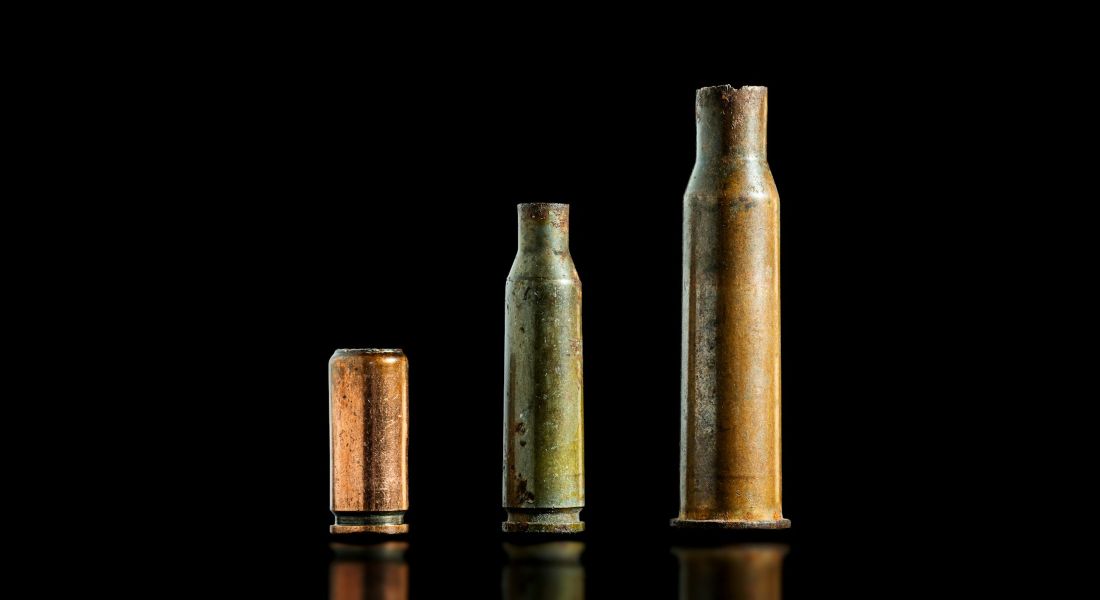
The Charts Don’t Even Agree
Here’s the strongest reason to treat the clock as a symptom rather than a verdict. The common online chart reads forward ejection, around 1 to 3 o’clock, as overgassed, and rearward ejection, past 4:30, as undergassed. American Rifleman’s AR-15 reliability guide reads it the other way. It treats brass exiting before 3:00 as a sign of short-stroking, and brass past 4:30 as overgassed, calling for a heavier buffer or spring.
Both agree that 3:00 to 4:30 is healthy. Outside that window, two widely cited references point you toward opposite fixes. When the interpretation flips depending on who you ask, the ejection pattern alone can’t tell you which part to change.
What Should You Check Instead of Brass Direction?
Use the clock to notice that something changed. Then confirm it with checks that point to a specific cause:
- Load one round in a magazine, fire, and see if the bolt locks back. A rifle that won’t lock back on empty is short on carrier travel, whatever the clock says.
- Watch for consistency, not just direction. A tight, consistent ejection pattern at an ‘odd’ spot is healthier than brass scattered across the clock.
- Read the case. Extractor marks are striated toolmarks on or just ahead of the rim, and ejector marks sit on the case head near the rim. A sudden change in those marks matters more than where the case landed.
- Log every failure to eject, stovepipe, or failure to feed. Malfunctions are a diagnosis. Brass direction is a hint.
- Check the primers. Flattened or cratered primers often point to pressure, though firing pin hole clearance can also crater primers. Either way, it’s not a gas-tuning question.
After any parts change, start with a function check, then confirm with live fire. Record the new pattern as your baseline only once the rifle runs clean.
The AK Throws Brass Its Own Way
AK readings follow different rules. The long-stroke piston and fixed ejector send brass well forward and a long way out, and dented cases are common on many AKs. None of that is a malfunction, and AR clock charts don’t apply to it.
On an AK super safety build, the brass pile won’t tell you much about the trigger either. An inconsistent reset can point to play in the AK retainer plate, which shifts the cam’s position relative to the trigger as it wears.
The same logic applies to any AK trigger upgrade. It changes the fire control group, not the ejector. Judge it by how the trigger resets, not by where the brass lands.
Read the Brass, Then Confirm It
Ejection pattern earns its place as an early warning. A shift from your rifle’s own baseline is worth noticing. But carrier mass, springs, ammunition, suppressors, and even shooting position move brass on healthy rifles, and the references can’t agree on what the clock means. Lock-back, case marks, and malfunction logs tell you what actually changed.
Redacted Arms builds parts around that kind of measurable consistency. If you’re planning AR trigger upgrades, especially a super safety with an M16 carrier, record your ejection pattern before and after the swap. A new baseline is expected. A new malfunction is the thing to chase.
FAQs
What should an AR-15 ejection pattern look like?
Most references put a healthy AR-15 between 3:00 and 4:30, with the muzzle at 12 o'clock. Carrier mass, buffer weight, ejector spring condition, ammunition, and suppressors all shift that, so consistency and reliable function matter more than hitting an exact spot.
Why is my AR-15 ejecting at 1 o'clock?
On the common online chart, forward ejection around 1 to 3 o'clock reads as overgassed. But full-auto carriers often eject there on healthy rifles, and American Rifleman reads early ejection as short-stroking instead. Check bolt lock-back and case marks before changing parts.
Does buffer weight affect ejection pattern?
Yes. Buffer weight and spring rate change how fast the carrier moves and how long it dwells, which shifts where brass lands. A buffer swap can move the pattern as much as a gas system change.
Does a suppressor change ejection pattern?
Yes. A suppressor sends more gas back into the action, which speeds the carrier and makes ejection more aggressive. Suppressed and unsuppressed patterns from the same rifle aren't directly comparable.
Why does my AK throw brass so far?
The AK's long-stroke piston and fixed ejector eject brass forcefully, well forward and a long way from the rifle. That's normal for the design, and dented cases are common. It isn't a sign of a problem by itself.
Can you tune a gas block using ejection pattern?
It's a starting point, not a final answer. Use it to spot a change, then confirm with bolt lock-back on an empty magazine, case marks, and malfunction logs before changing gas, buffer, or springs.