



What Is a Reliable Rifle? Key Design Factors Explained
A reliable rifle consistently feeds, fires, extracts, and ejects with minimal malfunctions across varied conditions. Reliability depends on action design, tolerance balance, material quality, and how well the system manages fouling, ammunition variation, and environmental stress over sustained round counts.
Every rifle operates through controlled explosions and precise mechanical timing. When you pull the trigger, expanding gas drives a sequence of parts that must move in perfect order. On the range, conditions seem predictable. In the real world, dirt, heat, moisture, and ammunition variation complicate everything. Many shooters confuse a reliable rifle with a tight group on paper or a recognizable brand name. Marketing often reduces reliability to slogans and reputation. That oversimplifies a complex mechanical system. This article breaks down what actually determines a reliable rifle from an engineering perspective. We focus on action design, tolerances, materials, ammunition compatibility, and environmental stress. Reliability is not a logo. It is the result of mechanical decisions.
What “Reliable” Means in Rifle Performance
Reliability is operational consistency. A rifle must:
- Ignite primers consistently
- Cycle the action without interruption
- Extract and eject spent cases cleanly
- Maintain low malfunction frequency across high round counts
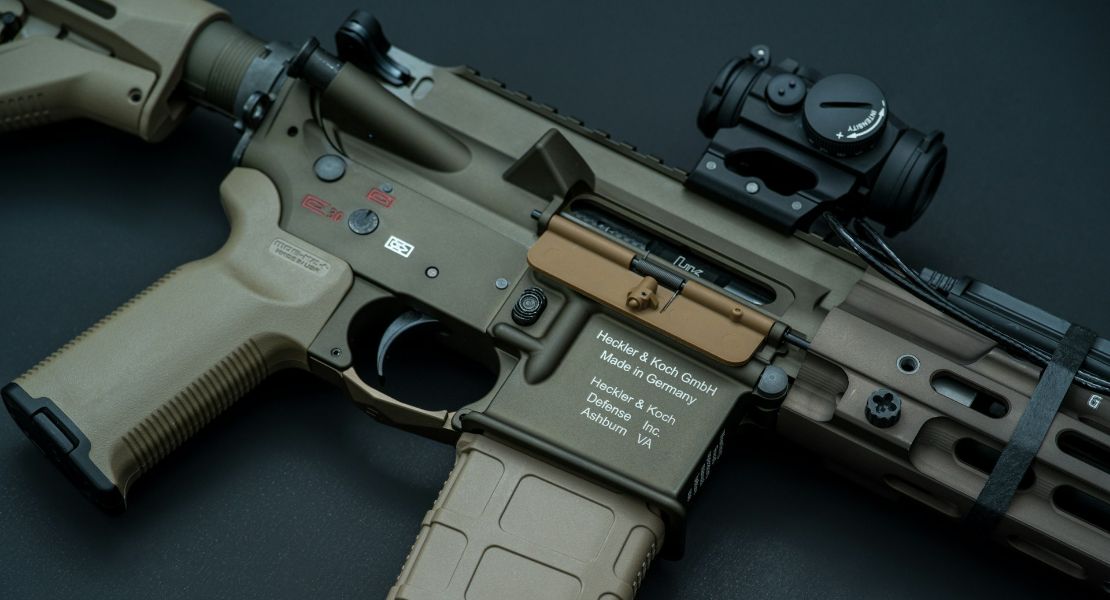
Reliability differs from durability. Durability refers to how long parts last before wearing out. A rifle can be durable yet unreliable if it malfunctions frequently. Reliability also differs from accuracy. A sub-MOA rifle that chokes every few magazines is not reliable.
Finally, reliability differs from user-induced malfunction. Improper lubrication, damaged magazines, or poor ammunition can create stoppages unrelated to the rifle’s engineering.
At its core, what makes a rifle reliable is system balance. Every component must work within a stable operating window. Reliability emerges from the entire mechanical ecosystem.
The Action System and Its Impact on Reliability
The action system is one of the primary rifle reliability factors because it controls how gas energy cycles the firearm. Bolt-action systems rely on manual operation, which makes them mechanically simple and highly tolerant of fouling. Fewer moving parts often mean fewer failure points. Direct impingement systems route gas directly into the bolt carrier. They are lightweight and efficient but introduce carbon into the action, so fouling management becomes critical.
Short-stroke piston systems use a separate piston to transfer energy. They keep the bolt carrier cleaner but add mechanical complexity. Long-stroke piston systems, like those in traditional AK platforms, use a single mass moving through the entire cycle. This increases inertia and tolerance to debris. Each design reflects a different balance between simplicity, cleanliness, and moving-part interaction, which directly influences reliability.
These differences explain why people ask, are some rifle actions more reliable than others. The answer depends on the environment, maintenance, and intended use. Action design directly shapes how rifle design affects reliability under stress.
Engineering Tolerances and Manufacturing Fit
Engineering tolerances determine how tightly parts fit together. Precision competition rifles often use extremely tight tolerances for consistency. However, tight builds leave less room for dirt or carbon buildup.
Service-oriented rifles typically allow a slightly looser fit. This increases debris tolerance at the expense of minimal movement.
Consistency in machining also matters. Even small dimensional variations across bolt lugs, gas ports, or chamber specs influence long-term performance.
When evaluating what affects rifle reliability the most, tolerance balance often ranks near the top. A well-designed rifle accounts for real-world fouling, not just laboratory conditions.
Materials and Durable Rifle Construction
Metallurgy determines how long parts withstand pressure and friction. Durable rifle construction starts with quality barrel steel and properly heat-treated bolt carrier groups. Critical components include:
- Bolt lugs that handle locking pressure
- Extractors that endure repeated stress
- Gas system parts exposed to extreme heat
Surface treatments such as nitride or chrome lining improve corrosion resistance and wear tolerance. Proper heat treatment prevents cracking or premature failure.
Over thousands of rounds, inferior materials reveal themselves quickly. Microfractures, extractor wear, or gas key loosening can undermine reliability.
The most reliable rifle design features are often invisible. They exist in alloy selection, machining standards, and thermal treatment processes rather than external appearance.

Ammunition Compatibility and Feeding Stability
Reliability depends on ammunition compatibility. Chamber dimensions, feed ramp geometry, and magazine design all influence feeding consistency. Gas pressure differences between loads also matter. Underpowered ammunition may not fully cycle the action. Overpowered loads may cause excessive bolt speed. Magazine geometry plays a major role. Poor magazine design can create nose-dives, double feeds, or inconsistent presentation angles.
The debate of AR-15 vs AK-47 often centers on feeding tolerance. The AK platform traditionally handles varied ammunition profiles more forgivingly. AR systems typically reward quality magazines and proper gas tuning.
Some rifles operate reliably only within narrow ammunition specifications. Others tolerate broader pressure ranges. Understanding what makes a rifle reliable in harsh conditions includes examining how it reacts to inconsistent ammunition.
Environmental Stress and Maintenance Tolerance
True reliability shows itself under imperfect conditions. Sand, dust, moisture, and temperature extremes challenge mechanical systems. A reliable rifle must tolerate
- Carbon buildup from extended firing
- Reduced lubrication
- Debris intrusion
- Heat expansion during rapid fire
Ease of field stripping also contributes. A rifle that allows quick inspection and cleaning maintains reliability more easily. Gas system balance determines lubrication dependency. Under-gassed systems may short-stroke. Over-gassed systems accelerate wear.
When discussing why the AR-15 became America’s most popular rifle, reliability improvements through decades of refinement play a major role. Modern AR platforms demonstrate consistent performance when properly maintained.
Maintenance tolerance defines long-term reliability. A rifle that only works in pristine conditions lacks real-world resilience.
Common Design Weak Points That Reduce Reliability
Certain design issues commonly undermine reliability:
- Under-gassed systems cause failure to cycle
- Over-gassed systems increase wear and recoil impulse
- Weak extractor systems leading to stuck cases
- Poor magazine compatibility can lead to feed failures
- Heat stress affects bolt integrity
Each flaw has operational consequences. Under-gassed rifles fail to extract. Over-gassed rifles batter internal components. Weak extractors struggle under pressure.
Small design miscalculations compound over time. Reliability failures often trace back to predictable mechanical weaknesses.
How to Evaluate Rifle Reliability Before Buying
Buyers should approach reliability analytically.
- First, examine proven action platforms with long service histories. Field data matters more than advertising.
- Second, review long-term round count reports from independent users. Look for consistency across thousands of rounds.
- Third, evaluate manufacturer testing standards. Reputable companies document endurance testing and material specifications.
- Fourth, assess parts availability. A rifle supported by established suppliers, including platforms supported by the super safety shop ecosystem, indicates broader adoption and component stability.
When exploring aftermarket enhancements like AK super safety components, ensure compatibility does not compromise gas balance or cycling dynamics.
Ultimately, how to evaluate rifle reliability before buying involves examining engineering, not brand prestige. Reliability stems from design decisions that remain consistent under stress.

Reliability Is Engineered, Not Assumed
A reliable rifle delivers consistent feeding, firing, extraction, and ejection over time. Reliability is mechanical consistency, not branding. It reflects action design, tolerance balance, material quality, ammunition compatibility, and environmental resilience working together. Understanding rifle reliability factors allows shooters to evaluate platforms realistically. Mechanical systems perform according to physics, not reputation. When assessing what makes a rifle reliable, focus on design choices and proven performance history. Informed evaluation prevents costly mistakes. A reliable rifle is not assumed. It is engineered through deliberate balance between durability, tolerance, and serviceability.
FAQs
What makes a rifle reliable?
A rifle is reliable when it consistently feeds, fires, extracts, and ejects with minimal malfunctions. Reliability depends on balanced action design, proper gas regulation, quality materials, and tolerance to fouling and ammunition variation.
What affects rifle reliability the most?
Action system design, gas system balance, engineering tolerances, and extractor strength have the greatest impact. Poor magazines and inconsistent ammunition also significantly influence performance.
Are some rifle actions more reliable than others?
Some action types tolerate fouling and debris better due to design simplicity and mass. Long-stroke piston systems are often more debris-tolerant, while direct impingement systems rely more on proper maintenance and lubrication.
Can a highly accurate rifle still be unreliable?
Yes. Tight tolerances that improve precision can reduce debris tolerance. A rifle built for extreme accuracy may be less forgiving under fouling, poor lubrication, or inconsistent ammunition if the operating window is too narrow.