



The MP5 in Law Enforcement — How It Became an Icon
The MP5 became a law enforcement standard through a combination of practical engineering, high-profile counterterrorism operations, and widespread agency adoption. GSG 9’s 1977 Mogadishu rescue and the SAS response to the 1980 Iranian Embassy siege gave the platform worldwide visibility, while later adoption by tactical units helped establish it as an enduring symbol of modern policing.
Most firearms build their reputations gradually through military contracts, commercial marketing, and word of mouth. The story of how MP5 became law enforcement standard followed a different path: a handful of high-profile counterterrorism operations demonstrated the platform in front of global audiences and tied its image directly to elite tactical units.
From GSG 9’s 1977 Mogadishu hostage rescue to the SAS assault during the 1980 Iranian Embassy siege, the MP5 appeared at defining moments in modern tactical policing. Its compact dimensions, controllability, and established ecosystem of firearm parts and accessories also supported its adoption across specialized units. Performance created the foundation, but worldwide visibility and decades of institutional use turned the MP5 into a law enforcement icon.
Why Did Law Enforcement Choose the MP5?
The MP5 became a police standard because it combined compact dimensions with the accuracy and controllability specialized law enforcement teams needed. The engineering philosophy behind the MP5 focused on adapting Heckler & Koch’s established roller-delayed operating system to a compact 9×19 mm platform suitable for close-quarters environments.
Heckler & Koch began developing the weapon in 1964 under the HK54 designation. West German police adopted it in 1966, and the firearm became known as the MP5.
The MP5 also occupies an important place in roller delayed blowback history, bringing a system Heckler & Koch had already used in rifle designs into a compact 9×19 mm submachine gun.
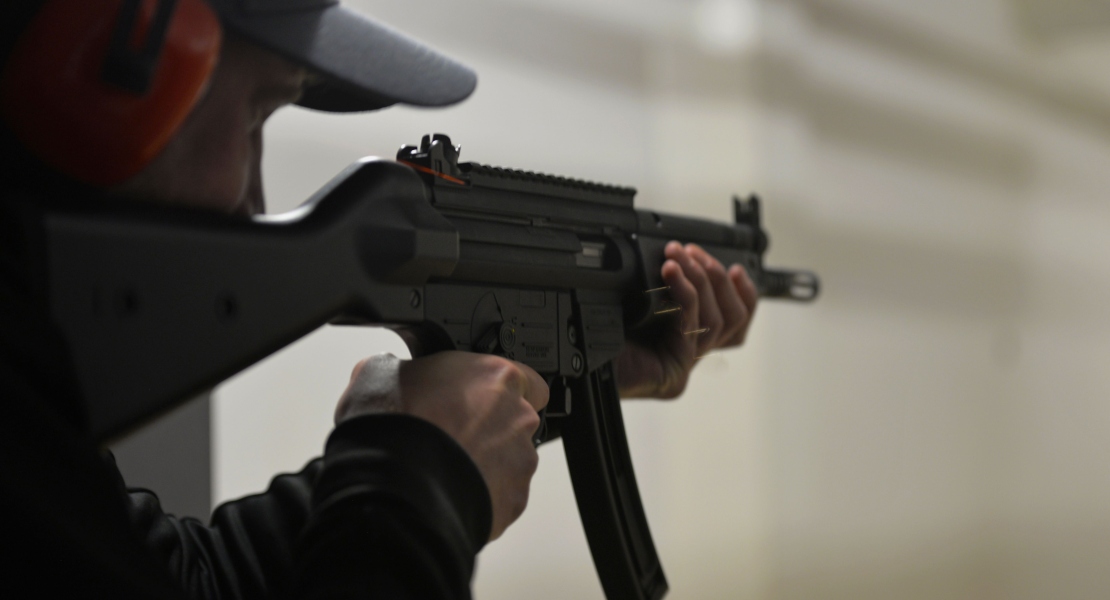
A major technical distinction was its roller-delayed blowback system and closed-bolt operation. Many competing submachine guns of the period, including the Uzi and Sterling, relied on simple blowback mechanisms and commonly fired from an open bolt. The MP5’s approach supported consistent accuracy while keeping the platform relatively compact.
Size also mattered. Police tactical teams increasingly needed firearms suited to buildings, vehicles, aircraft, and other confined environments. The MP5 addressed those requirements without the dimensions of a full-size service rifle. Later variants such as the compact MP5K and suppressed MP5SD extended the platform into additional specialized roles.
These characteristics helped establish the MP5 police standard. It gave tactical teams a compact 9 mm platform that fit the close-quarters roles increasingly faced by specialized law enforcement units during the 1970s and 1980s.
GSG 9 and the Operation That Changed Everything
GSG 9’s 1977 hostage rescue in Mogadishu became a defining moment in MP5 law enforcement history. The operation connected the MP5 with a successful counterterrorism mission at a time when police agencies worldwide were developing specialized tactical capabilities.
West Germany created GSG 9 after the 1972 Munich Olympics massacre exposed serious weaknesses in the country’s response to terrorism. By April 1973, the new federal counterterrorism unit had become operational and was preparing for incidents that conventional police forces were not equipped to handle.
Its defining early test came in October 1977, when terrorists hijacked Lufthansa Flight 181. After several days and multiple stops, the Boeing 737 reached Mogadishu, Somalia, where GSG 9 launched Operation Feuerzauber during the early hours of October 18.
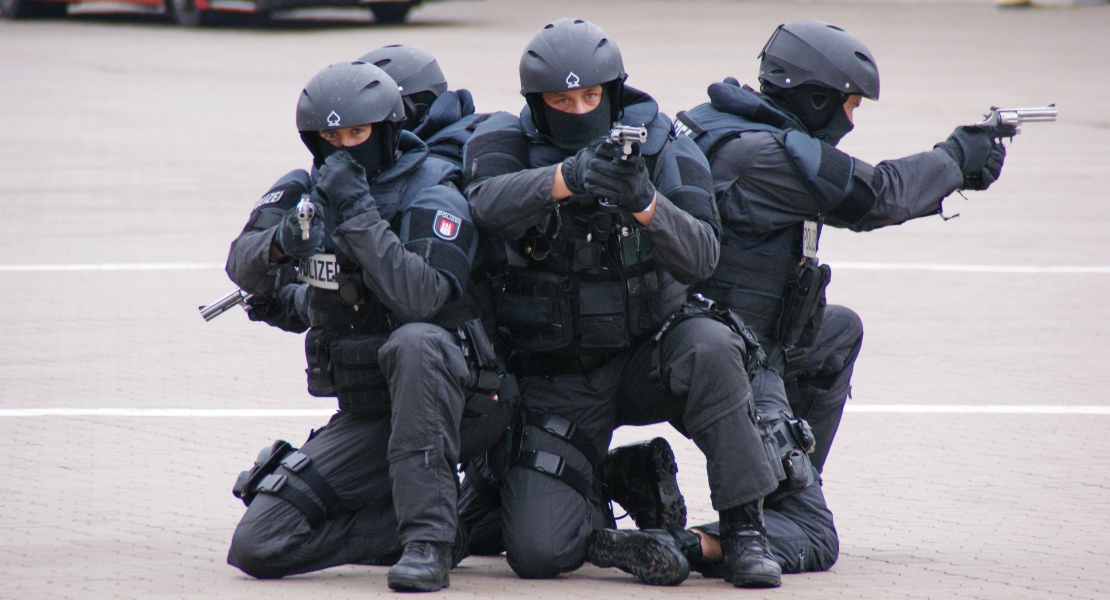
The assault freed the hostages and established GSG 9 as a leading counterterrorism unit. The MP5, already used by German police, became closely associated with this new model of specialized tactical policing.
Mogadishu represented more than operational exposure. It gave other agencies a real-world example of a compact 9 mm platform being used by a highly trained unit during a demanding hostage-rescue mission.
That association between the MP5, GSG 9, and counterterrorism would help shape the firearm’s international reputation for decades.
Agency Adoption and the Spread of the Standard
Understanding how the MP5 became a law enforcement standard requires looking beyond a single successful operation. After the MP5 gained credibility with European counterterrorism units, adoption by other prominent tactical organizations helped establish it as a trusted choice across multiple countries.
The 1980 Iranian Embassy siege provided one of the most influential examples. On May 5, British SAS operators stormed the embassy in London during Operation Nimrod, rescuing 19 hostages. Television coverage showed the assault to a huge international audience, strengthening the association between the MP5 and elite counterterrorism teams.
The platform also gained ground in the United States. Heckler & Koch established its American operation in 1976, and MP5 variants later appeared with federal agencies and police tactical teams. The FBI’s Hostage Rescue Team, established in 1983, became one of the prominent American tactical units associated with the platform.
Institutional adoption created its own momentum. Agencies often trained alongside other tactical teams, compared equipment, and learned from established operational practices. A firearm already supported by training programs, armorers, spare parts, and years of field experience presented fewer unknowns than an unfamiliar alternative.
By the 1980s and 1990s, the MP5 had moved beyond its early European roots. Repeated adoption by specialized units helped turn it from one tactical option into a defining law enforcement firearm of its era.
Hollywood, Pop Culture, and Why the Icon Stuck
Hollywood helped turn the MP5 from a specialized law enforcement firearm into a global cultural icon. Filmmakers chose it because real tactical and counterterrorism units already used it, giving the weapon an authentic connection to professional police operations.
Die Hard (1988) became one of the most famous examples. Its prominent use of MP5-pattern firearms introduced the weapon’s distinctive profile to millions of viewers. Films such as Heat (1995), along with numerous police and action television productions, reinforced that recognition throughout the 1980s and 1990s.
This created a feedback loop. Tactical units gave the MP5 credibility on screen, while movies and television strengthened its public association with elite police teams, hostage rescue, and counterterrorism. Even people who had never seen an MP5 in person could recognize what it represented.
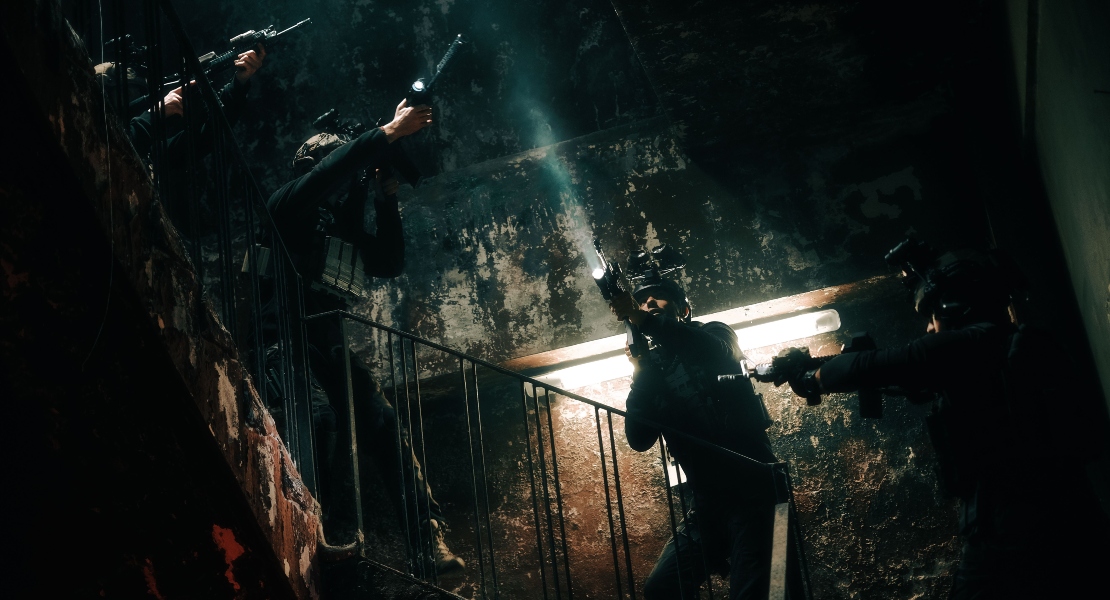
That recognition continues to influence online interest today, including searches for terms such as MP5 super safety. However, that modern term should not be confused with the original factory MP5 design or the technical features that drove its historical police adoption.
Newer compact rifles have since replaced the MP5 in many roles, but few have achieved the same cultural recognition. Decades of real-world police use combined with film and television exposure ensured that the MP5 remained one of the most recognizable tactical firearms of its era.
The shift toward rifle-caliber platforms also explains why AR-15 vs MP5 comparisons became more relevant to modern law enforcement. The MP5 built its reputation around compact dimensions and a 9×19 mm chambering, while AR-15-pattern carbines offered different ballistic capabilities and increasingly became common choices for police patrol and tactical roles.
Performance, Visibility, and Institutional Momentum
The story of how the MP5 became a law enforcement standard comes down to three factors: performance, visibility, and institutional momentum. Its compact size, controllability, and roller-delayed design made it practical for tactical units, while high-profile counterterrorism operations boosted its reputation. GSG 9’s 1977 Mogadishu rescue and the 1980 Iranian Embassy siege reinforced its association with counterterrorism. As more units adopted it, training and experience kept its prominence. Hollywood in the 1980s and 1990s cemented its status as an icon of elite tactical teams. Although newer rifles now replace it in many roles, decades of use and pop culture recognition keep the MP5 one of the most recognizable firearms in tactical policing.
FAQs
Why did law enforcement choose the MP5?
Law enforcement agencies chose the MP5 because it offered a useful combination of compact size, controllability, accuracy, and configuration options. Its characteristics made it particularly suitable for specialized teams operating inside buildings, vehicles, aircraft, and other confined environments.
What made the MP5 better than other submachine guns?
One major difference was its roller-delayed blowback system combined with closed-bolt firing. Compared with many contemporary open-bolt, simple-blowback submachine guns, the MP5 provided a design well suited to accurate and controllable fire while remaining relatively compact.
When did police start using the MP5?
West German police adopted the design in 1966. Its international reputation grew during the 1970s as specialized counterterrorism units expanded, with GSG 9's 1977 Mogadishu hostage rescue becoming an important milestone. Adoption spread further through European and American tactical organizations during the 1980s.
Is the MP5 still used by law enforcement?
Yes. The MP5 remains available specifically for military and law enforcement customers, and Heckler & Koch still describes it as primarily intended for police and first-response units. However, many organizations have shifted some former MP5 roles to newer compact rifle-caliber platforms, while the MP5 continues to serve where its size, controllability, established training base, or specialized configurations remain useful.