



The AK-74M Platform: How It Evolved After the Cold War
The AK-74M modernized the Soviet AK-74 by combining a folding polymer stock, standard optics mounting, production refinements, and other updates into one general-purpose rifle. Introduced in 1991, it became Russia’s post-Soviet service rifle, provided the foundation for the AK-100 series, and remained relevant through later modernization programs.
The AK-74M occupies an unusual place in Kalashnikov history. It was developed at the end of the Soviet era, entered full-scale production in 1991, and then spent almost its entire service life in a country that had not existed when the program began. That timing shaped what the rifle became. The AK-74M did not replace the AK-74 with a new cartridge or operating system. Instead, it consolidated several existing configurations into a more versatile standard rifle, updated materials and manufacturing, and created a platform that could adapt to the military and export realities of the post-Cold War period. In that sense, the AK-74M was a late-Soviet rifle that became a distinctly post-Soviet platform.
The AK-74M Arrived at the End of One Era
By the late 1980s, the Soviet Union was not looking for another major cartridge change. The move from the 7.62×39mm AKM family to the 5.45×39mm AK-74 had already happened during the 1970s. That earlier shift is the important distinction between the AK-47 and the AK-74; the AK-74M addressed a different problem.
The AK-74 family had matured into several configurations for different requirements. There was the standard fixed-stock AK-74, the side-folding AKS-74, and optics-capable “N” variants fitted with a receiver-mounted rail.
The modernization program focused on bringing more of those capabilities into one standard rifle while refining the existing 5.45mm platform. The timing meant that what had effectively been the final major Soviet development of the AK-74 became one of the first important service rifles inherited by the Russian Federation.

What the “M” Actually Changed
The “M” stands for modernized, but the AK-74M was not a clean-sheet redesign. It retained the 5.45×39mm cartridge, rotating bolt, and familiar long-stroke gas-piston system while changing the configuration around that core. The U.S. Army’s AK-74M technical entry documents several of the changes introduced with the rifle:
- Black glass-filled polyamide furniture replaced the earlier wood and plum-colored polymer associated with previous AK-74 production.
- A full-size side-folding stock combined the support of a conventional stock with the compactness previously provided by the AKS-74.
- A left-side optics rail became standard instead of being limited to dedicated optics-capable variants.
- Internal and production refinements updated the bolt and carrier assembly, muzzle device, dust cover, return-spring system, and several manufacturing details.
The less visible changes are worth noting because they show that the AK-74M was more than a furniture update. The bolt and carrier were lightened, the dust cover was reinforced, the return-spring retainer was revised, and several components were redesigned or produced differently to simplify manufacturing.
The larger goal was straightforward: improve versatility and production efficiency without abandoning an operating system that was already established.
How the AK-74M Consolidated Earlier Configurations
The difference becomes clearer when the AK-74M is compared with the separate configurations that had preceded it.
| Requirement | Earlier AK-74 Family | AK-74M Approach |
|---|---|---|
| Standard infantry rifle | AK-74 | One general-purpose AK-74M configuration |
| Folding stock | AKS-74 variant | Standard full-size folding polymer stock |
| Optics mounting | Dedicated “N” variants | Side rail fitted as standard |
| Furniture | Wood or earlier polymer depending on production period | Black glass-filled polyamide |
The AK-74M still looked unmistakably like an AK-74 because standardization, not visual reinvention, was the point. One production configuration could now cover roles that had previously required separate versions.
Post-Soviet Russia Kept the AK-74M at the Center
The Soviet collapse changed the environment around the rifle far more dramatically than it changed the rifle itself. Russia inherited large stocks of Kalashnikov weapons, established factories, trained personnel, spare parts, ammunition supplies, and decades of institutional familiarity with the system. Replacing all of that required more than developing a technically impressive rifle. A successor also had to justify new production, maintenance, training, and logistical demands during a period when Russian military procurement faced very different economic conditions from those of the Soviet era.
The AK-74M already fit the existing system while improving the standard service configuration. Its continued relevance also reflected the same priorities behind Cold War AK design: mechanical simplicity, durable construction, straightforward training, and a platform that could be supported at scale.
A More Advanced Replacement Never Fully Replaced It
The AN-94 emerged from the Soviet Abakan program and was formally adopted by Russia in 1997 as a potential successor to the AK-74 family. Mechanically, it was a much more ambitious rifle and offered capabilities the AK-74M did not. What it did not offer was an easy transition. The AN-94 was considerably more complex, while the AK-74M was already part of existing production and logistics. Procurement remained limited, and the newer rifle never displaced the Kalashnikov across the Russian military.
The outcome reinforced one of the AK-74M’s advantages: evolutionary improvement was easier to sustain at scale than replacing an established system simply because a more sophisticated alternative existed.
The AK-74M Became the Foundation of the AK-100 Series
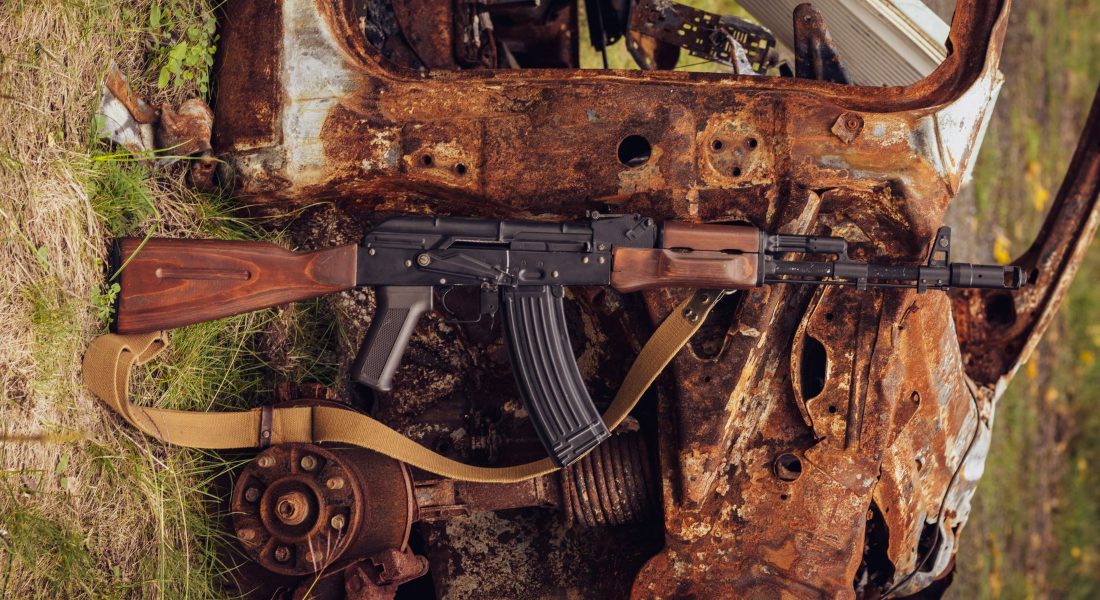
The end of the Soviet Union also changed Izhmash’s commercial priorities. Domestic military orders declined, while international customers became more important. The company responded by using the AK-74M design as the basis for rifles chambered in several cartridges and offered in both full-length and compact configurations.
The resulting AK-100 family included the full-length 5.56×45mm AK-101 and 7.62×39mm AK-103, along with the shorter AK-102, AK-104, and AK-105. The AK-74M remained the full-length 5.45×39mm member of the same broader generation. Despite the family name, there was no official “AK-100” production rifle; the name refers to the series rather than a single model.
The family showed that the AK-74M had become more than a single 5.45mm service rifle. Its design could support different cartridges, barrel lengths, and export requirements without abandoning the basic Kalashnikov formula.
The AK-100 series was only one branch among the many different types of AKs, but it shows how the AK-74M influenced the next generation of Kalashnikov rifles.
Modernization Happened Around the Core Rifle
By the 2000s and 2010s, the equipment expected on an infantry rifle had changed considerably. Optics, lights, aiming devices, adjustable stocks, and standardized accessory mounting had become increasingly important. The AK-74M’s standard side rail gave it an advantage over earlier configurations, but its furniture and accessory layout still reflected the requirements of another era. Russia therefore began updating existing rifles through the KM-AK modernization package, commonly associated with the “Obves” program.
The kit added revised furniture, improved accessory mounting, a telescoping folding stock, updated controls, and other ergonomic changes. Instead of replacing the receiver and operating mechanism, it changed the parts of the rifle that interacted with modern optics, accessories, and the shooter. Underneath those updates remained the familiar rotating bolt and long-stroke gas system. By this stage, much of the platform’s evolution involved improving what surrounded the action rather than finding a new way to cycle it.
The AK-200 Took the Same Idea Further
The same modernization pressure also produced the AK-200 series, which had initially been developed under the AK-100M designation. Rather than abandoning the AK-100 architecture, the newer rifles integrated modern accessory mounting, adjustable stocks, and revised ergonomics more directly into the production design.
The AK-200 and KM-AK programs were closely connected. Several features incorporated into the retrofit kits came from the AK-200 development path, allowing existing AK-74Ms to gain some of the same ergonomic improvements without requiring the entire rifle to be replaced. That created two routes forward from the same basic platform: update rifles already in inventory, or manufacture a newer version with those changes built in from the start.
The same compatibility principle applies on the civilian side. “AK” describes a broad design family rather than one universal set of dimensions, so modern AK platform components still need to match the specific configuration they are designed to support.
From AK-74M to AK-12
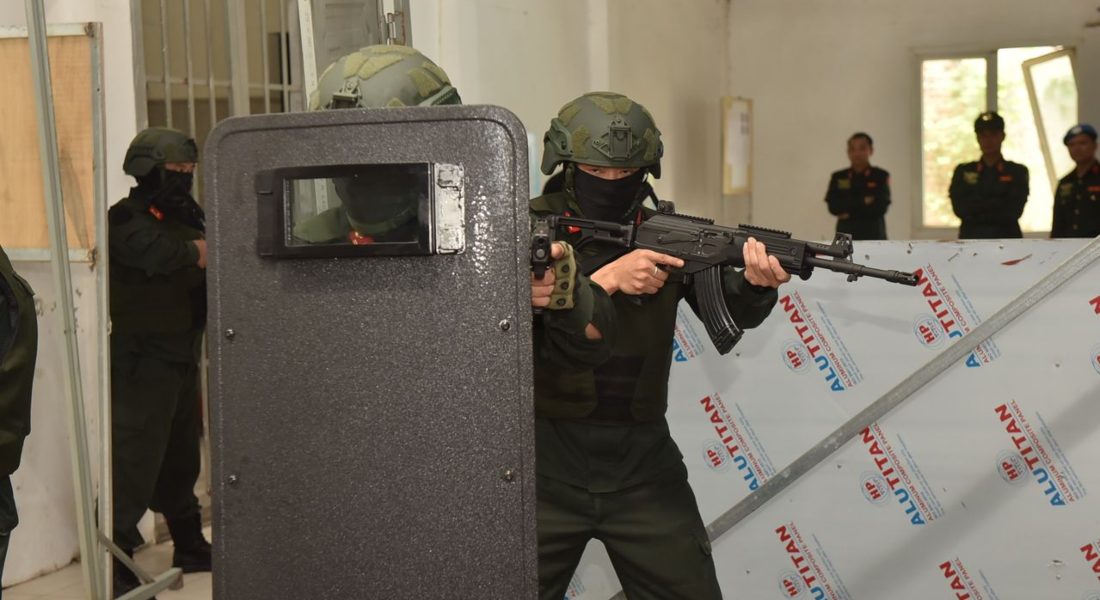
Modernization kits could extend the AK-74M’s usefulness, but they also had limits. Eventually, Russia moved toward a new-production service rifle through the AK-12 program rather than continuing to update the 1991 configuration indefinitely.
The AK-12 began entering Russian service in the late 2010s, starting a gradual transition rather than making the AK-74M disappear overnight. Older rifles remained in inventory while newer AK-12s introduced a platform designed from the outset around contemporary accessory mounting, adjustable ergonomics, and modern sighting equipment.
The AK-12 itself has continued to change. The Type 2023 followed the earlier 2018 and 2021 configurations with revisions to the controls, sights, forearm, receiver-cover mounting, and muzzle system. The progression shows that the pressure to modernize did not end when Russia moved beyond the AK-74M. It simply shifted to a newer generation of the Kalashnikov platform.
The AK-74M Became a Bridge Between Eras
The AK-74M modernized the parts of the rifle that needed to change without discarding the mechanism Russia already knew how to build, support, and use. That gave the platform room to adapt to a military and commercial environment very different from the one in which it was designed. Its legacy is therefore less about one mechanical breakthrough than about longevity. A rifle developed at the end of the Soviet era became the reference point for much of the Kalashnikov family’s post-Cold War evolution.
FAQs
What does the “M” in AK-74M mean?
The “M” stands for “modernized.” The AK-74M retained the 5.45×39mm cartridge and basic AK-74 operating system while adding features including a full-size folding polymer stock, standard optics rail, updated furniture, and several manufacturing and component refinements.
When was the AK-74M introduced?
Izhmash began full-scale AK-74M production in 1991. It had been developed as the next standard Soviet service rifle, but the Soviet Union dissolved in December of that year, leaving the Russian Federation to inherit the platform.
What is the difference between the AK-74 and AK-74M?
The AK-74M consolidated several capabilities that had previously appeared across different AK-74 variants. It added a full-size side-folding polymer stock, a standard left-side optics rail, black polymer furniture, and a number of production and component updates while retaining the same 5.45×39mm cartridge and long-stroke operating system.
Is the AK-74M part of the AK-100 series?
The AK-74M is closely tied to the AK-100 family and provided the design foundation for the series. During the 1990s, Izhmash used the same broad architecture to develop rifles including the 5.56×45mm AK-101 and 7.62×39mm AK-103, along with shorter AK-102, AK-104, and AK-105 variants.
Did the AK-12 replace the AK-74M?
The AK-12 began a gradual replacement of older AK-74M rifles rather than eliminating them immediately. AK-74Ms remained in service and were also modernized with updated furniture and accessory systems as newer AK-12 configurations entered Russian military use.