



How to Transport Firearms Safely: What Most Gun Owners Get Wrong
Most firearm transport mistakes come from assuming home-state rules apply everywhere, not knowing the difference between transport mode and carry, and skipping the case and ammunition separation requirements that apply in most states. Transport mode and carry mode are legally distinct — and confusing them is the most common mistake. Getting this wrong doesn't require bad intent — it just requires assuming the rules you know are the rules that apply.
Most gun owners who transport firearms regularly assume they’re doing it correctly. Then they cross a state line, stop near a school, or check a bag at an airport and discover the rules are entirely different from what they assumed. For anyone who shoots regularly and buys through a super safety shop, knowing how to transport firearms safely is the same category of responsible ownership as understanding how your firearm operates. The rules don’t follow you across state lines — you have to follow them.
Transport Mode vs. Carry Mode — The Distinction Most Owners Miss
Most owners understand carry rules but treat transport as an extension of carry. It isn’t. Transport mode means unloaded, locked in a case, and not immediately accessible. Carry mode means loaded and on your person with a valid permit. A firearm in the center console with a permit in the wallet is carry mode — and carry mode is subject to the laws of whatever state you’re currently in, not your home state.
The permit doesn’t travel with you the way you think it does. A firearm in transport mode is legally neutral in most states regardless of permit status. A firearm in carry mode is subject to every carry restriction of every state you pass through. Several states explicitly prohibit the center console and glove compartment as storage locations even for permit holders — a detail most owners discover only during a traffic stop.
This is also where a lot of common firearm myths take hold — the idea that a valid permit makes vehicle carry universally legal is one of the most widely held and most frequently wrong assumptions in firearm ownership.
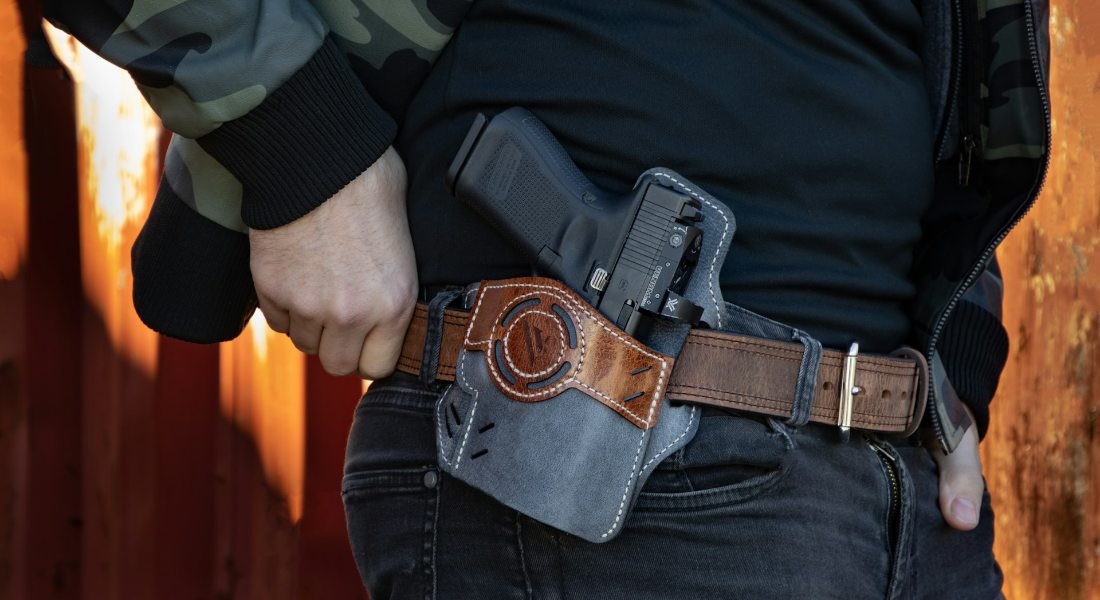
What Transporting Firearms in a Vehicle Actually Requires
The requirements vary by state, but the baseline is consistent enough to apply everywhere as a default:
- Unloaded — verified empty, not just assumed
- Locked hard-sided case — the case must be lockable and hard-sided; soft range bags are not legally sufficient in several states, and are the most commonly used transport container at the same time
- Not accessible from the passenger compartment — trunk, or rearmost compartment in vehicles without a trunk
The hard case vs soft case distinction matters more for transport than it does for storage. A soft range bag feels like enough because it keeps the firearm contained, but it doesn’t meet the locked hard-sided requirement that applies in many states. Swapping to a hard-sided lockable case before any interstate travel covers the baseline in almost every situation without needing to know every state’s specific rules.
Road Trips and State Lines — What Interstate Travelers Get Wrong
Most owners apply the same logic they use to safely store firearms at home to their vehicle, locked and out of sight. But how to transport firearms safely requirements vary significantly by state in ways that home storage rules don’t. Some states prohibit certain magazine capacities or firearm configurations regardless of permit status.
The practical framework for any road trip: treat the firearm as transport-only for the entire journey and plan as if you’re operating under four different rule sets simultaneously: federal law, home state, each state driven through, and destination state. Defaulting to transport mode for the full trip keeps you legally neutral in every state you pass through.
One detail road-trip planners consistently overlook: rest areas, roadside stops, and routine gas station stops near schools, courthouses, and postal facilities create gun-free zone exposure. Stopping for coffee within 1,000 feet of a school, even briefly, even without knowing the school is there, can create a technical violation. Route awareness matters more than most travelers realize.

Flying With Firearms — What the TSA Actually Requires
The TSA process for checked firearms is specific and unforgiving. The requirements: unloaded, in a hard-sided case with locks that only you can open, declared at check-in before the bag enters the system. Missing any one step escalates quickly.
The most counterintuitive mistake is using TSA-approved locks. TSA-approved means TSA can open it, which is specifically what the regulation prohibits for firearm cases. The lock must be one that only you can open. Most travelers assume TSA-approved means TSA-compliant for this purpose. It means the opposite.
The other two common air travel mistakes: ammunition must be in its original packaging, or a hard-sided container. Not loose in a bag or mixed with other gear. And the firearm must be declared at the check-in desk, not carried to a security checkpoint. Taking it to the wrong location is where the process escalates from a missed flight to a criminal investigation.

How to Transport Firearms Safely: The Practical Checklist
A consistent pre-trip routine covers the baseline across most situations without needing to memorize every state’s specific rules:
- Verify unloaded: check chamber and magazine, don’t assume
- Hard-sided locked case: not a range bag, not a soft case
- Ammunition separated: original packaging or hard-sided container, not loose
- Case in trunk or rearmost compartment: out of passenger compartment reach
- Check destination state rules: magazine limits, transport requirements, and any specific restrictions
- Verify hotel policy if overnight: many hotels prohibit firearms in guest rooms; unauthorized storage can violate house rules or local law, depending on where you are
The same preparation mindset that applies to a pre-range inspection applies here: a brief, consistent checklist before every trip prevents the mistakes that happen when owners assume everything is fine without checking.
The Rules Don’t Follow You, You Have to Follow Them
Firearm transport mistakes almost never come from bad intent. They come from assuming the rules you know are the rules that apply wherever you are. Treating every trip as a new rule set and knowing how to transport firearms safely without relying on assumptions covers the vast majority of situations without requiring encyclopedic knowledge of every state’s laws.
FAQs
Can you transport a loaded firearm in your car?
In most states, no. Transport mode requires the firearm to be unloaded regardless of permit status. Some states allow loaded transport for permit holders in specific circumstances, but the default safe position is unloaded in a locked case. Checking the destination state's specific rules before travel is the only reliable way to know what's permitted where you're going.
Do you need a case to transport a firearm?
Yes, in majority of states. The case requirements matter. A hard-sided lockable case is the standard requirement; soft range bags don't qualify in several states, even though they're the most commonly used transport container. The case also needs to be locked, not just closed.
Can you transport a firearm across state lines without a permit?
Yes, under specific conditions. The Firearm Owners Protection Act allows the interstate transport of a legally owned firearm without a permit, provided the firearm is unloaded, in a locked container, and the owner is legally allowed to possess it in both the origin and destination states. This provision doesn't override destination state possession laws; it covers the transit itself.
Can you leave a firearm in your car overnight?
It depends on state law and local ordinance, but most states require it to be locked and out of sight at a minimum. Some states prohibit leaving a firearm in an unattended vehicle entirely. Beyond the legal question, an unsecured firearm in a vehicle is a theft risk. Stolen firearms are a significant source of illegally circulating weapons, regardless of the owner's compliance with storage rules.