



How to Read Shot Groups and Diagnose Shooting Errors
Shot groups tell a specific story about what's happening during the firing cycle — consistent patterns point to consistent errors, and knowing how to read shot groups correctly separates a shooter who improves from one who keeps repeating the same mistake without understanding why. A scattered group and a shifted group are two different problems; treating them the same way produces zero improvement.
Most shooters look at a shot group and see a result. The ones who improve fastest look at the same group and see a cause. Before choosing firearm super safety upgrades or any other modification, understanding whether a group problem comes from the shooter or the equipment is what determines the right fix. The difference between a shooter who plateaus and one who improves consistently is usually the ability to read what the target is actually saying.
What Shot Group Patterns Actually Tell You
Shot group diagnosis starts with one principle: consistency tells you more than location. A tight group six inches left doesn’t mean something is wrong — it means the shooter is doing something consistently, just with a sight or zero issue rather than a technique problem. A tight but shifted group is an equipment or zero problem. A scattered group is always a technique problem.
Three distinct pattern types each carry different diagnostic meaning:
- A tight but shifted group means the shooter’s technique is consistent — the same process is producing the same result every shot. The variable to check is the sight, zero, or ammunition, not the shooter’s mechanics. Shooters who see a tight cluster away from center and assume they’re doing something wrong are often actually doing something consistently right.
- A scattered group means multiple variables are changing between shots. There’s no single repeatable error to identify — several fundamentals are inconsistent simultaneously. This is the hardest pattern to diagnose from the target alone because the cause isn’t singular.
- Vertical or horizontal stringing means one specific variable is changing consistently in one direction. The shots aren’t random — they’re spreading along an axis, which points to a specific repeatable error worth investigating.
Reading shot patterns means looking at the group’s shape and consistency before looking at where it landed.
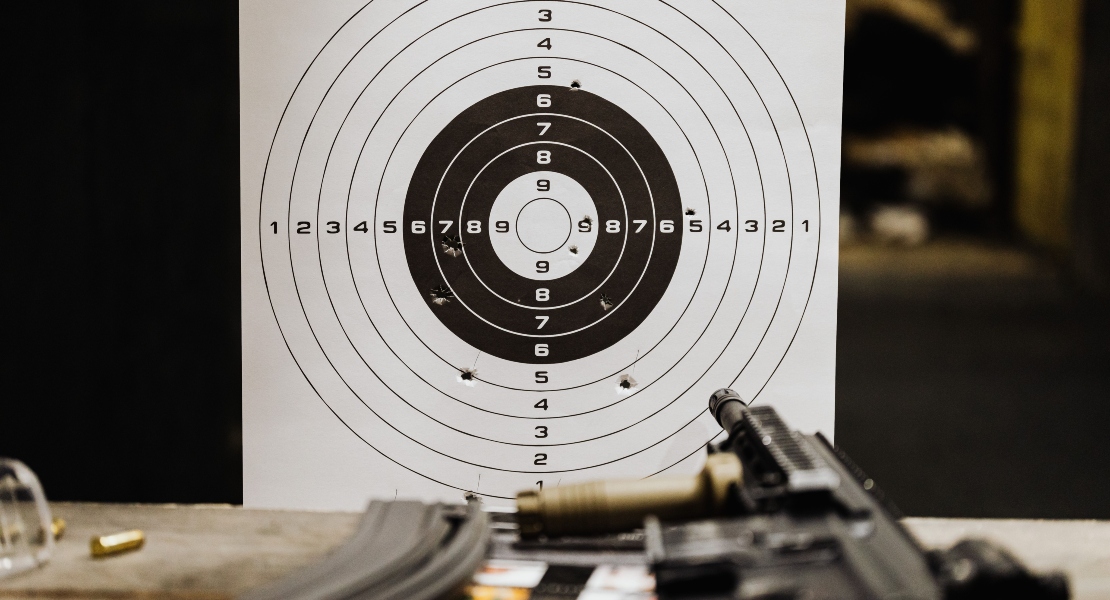
Common Patterns and What Causes Them
Traditional target-diagnosis charts associate specific impact locations with specific shooter behaviors. They’re useful starting points — not definitive diagnoses, since handedness, firearm type, sights, ammunition, and shooting position all affect what appears on the target. Use the table as a starting point for what to investigate, not as a confirmed cause.
| Observed Pattern | Factors Worth Checking |
|---|---|
| High and right (right-handed shooter) | Recoil anticipation, flinching, or abrupt trigger input around the shot break |
| Low and left (right-handed shooter) | Changes in hand pressure or pushing the firearm forward as the shot breaks |
| Vertical stringing | Inconsistent trigger pull speed or grip pressure between shots; ammunition and equipment variables can also contribute |
| Horizontal stringing | Head position or cheek weld inconsistency, support differences, outdoor wind conditions |
| Random scatter | Multiple variables changing simultaneously — no single repeatable cause to isolate |
High and right is the single most common shot group problem for right-handed shooters. It’s consistent enough to have a name and a specific fix. The flinch that produces it develops from anticipating recoil before the shot breaks, and trigger discipline dry fire drills are what address it directly. Random scatter is the hardest pattern because there’s no single cause — multiple fundamentals are breaking down simultaneously, which is why dry fire practice in firearms training is the fix rather than any single technique adjustment.
Shooter Error vs Equipment Issue — How to Tell the Difference
The most common misdiagnosis in shot group analysis is a shooter blaming the gun for a scattered group that tightens immediately when shot from a rest. Most shot group problems are shooter error. The bench rest test confirms which one in under a magazine.
Three diagnostics separate shooter error from equipment issues:
- The bench rest test is the fastest. Shoot the same ammunition from a supported rest and compare the group to your standing or unsupported group. If the group tightens dramatically, the shooter is the variable — not the gun. If the group stays scattered from the rest, the firearm, sights, or ammunition deserve inspection.
- The swap test removes the shooter variable entirely. Have a known good shooter run the same gun and ammunition under the same conditions. If their group is significantly tighter, the technique is the issue. If they produce the same pattern, the equipment needs attention.
- The ammo test isolates the ammunition variable. If groups change dramatically between appropriate ammunition types with everything else held constant, ammunition and firearm compatibility may be contributing.
Diagnosing shooting errors correctly means ruling out the shooter first before looking at the equipment; not because equipment problems don’t exist, but because they’re far less common than shooter error and the bench rest test takes thirty seconds to confirm. For modifications that introduce new variables, including an AR15 super safety or any other trigger system change, unusual group behavior that begins after installation warrants inspection of the modification before assuming technique is the cause.
Read the Group, Fix the Cause
Shot group analysis comes down to pattern recognition before cause assignment. A tight but shifted group points to sights, zero, or equipment. A scattered group points to technique. Stringing points to one specific repeatable variable. Identify the pattern type first, run the bench rest test to confirm whether the shooter or the equipment is the variable, then address the specific cause rather than the general result. The target provides the evidence — reading it correctly is what makes range time productive instead of frustrating.
FAQs
What does a scattered shot group mean?
A scattered group means multiple variables are changing between shots rather than one consistent factor producing the same result. It's the hardest pattern to diagnose from the target alone because there's no single repeatable cause — fundamentals are breaking down in several ways simultaneously. Dry fire practice that focuses on one variable at a time is the most effective fix.
How do I tell if my shot group problem is shooter error or the gun?
Run the bench rest test first — shoot the same ammunition from a supported rest and compare the group. If it tightens dramatically, the shooter is the variable. If it stays scattered, the firearm and ammunition deserve inspection. The swap test confirms further — have a known good shooter run the same setup and compare results.
What causes shots to go high and right?
For a right-handed shooter, high and right is almost always anticipation of recoil — the flinch that develops from expecting the shot before it breaks. The fix is dry fire, not a grip change or a different trigger. A consistently tight group that's shifted high and right rules out technique as the cause and points to sights or zero instead.
How do I improve shot group consistency?
Identify the pattern type before deciding what to fix. A tight but shifted group needs a zero or sight check. Stringing in one direction points to one specific repeatable variable. Scattered groups need dry fire work focused on fundamentals one at a time. The fix follows the diagnosis — addressing the wrong cause produces no improvement regardless of how much practice goes into it.