


What Is an FRT Trigger? How Forced Reset Triggers Work
An FRT (forced reset trigger) is a drop-in AR-15 trigger group that uses the bolt carrier and hammer to push the trigger forward after every shot, then holds it with a locking bar until the bolt is back in battery. Each round still takes its own trigger pull. Since the May 2025 DOJ settlement with Rare Breed Triggers, covered FRT designs are not treated as machine guns federally, while state laws vary.
If you have searched for faster-resetting AR-15 parts, you have run into the question what is an FRT trigger, usually followed by a dozen conflicting answers. FRT stands for forced reset trigger: a drop-in trigger group that uses the rifle’s own cycling to push the trigger forward after every shot, instead of waiting for your finger and a spring to do it. The design sits at the center of one of the longest firearm classification fights of the last five years, which is why it is worth understanding before you buy anything. At Redacted Arms, we build reset systems for the AR-15, AK, MP5, and TX22, so here is how an FRT trigger actually works and how it compares to the alternatives.
| System | What resets the trigger | Shots per trigger function | Where it installs |
|---|---|---|---|
| Standard semi-auto trigger | Trigger spring, as you release the trigger | 1 per pull | Factory fire control group |
| Forced reset trigger (FRT) | Hammer, driven rearward by the bolt carrier | 1 per pull | Replaces the trigger, disconnector, and hammer |
| Binary trigger | Trigger spring, with a second release stage | 1 on pull + 1 on release | Replaces the fire control group |
| Bump stock | Trigger spring; recoil slides the rifle back into a stationary finger | 1 per bump | Replaces the stock |
| Super Safety (active reset position) | Selector cam, driven by the bolt carrier through a lever | 1 per pull | Replaces the safety selector; uses a cut trigger |
What Does FRT Stand for in Firearms?
In firearms, FRT means forced reset trigger. The “forced” part is the whole idea. On a standard AR-15, the trigger only moves forward when you ease off it and the trigger spring pushes it back to its reset point. An FRT does not wait for that. It uses energy from the cycling action to drive the trigger forward mechanically, every single shot.
The best-known designs are the Rare Breed FRT-15 and the Wide Open Trigger, both built for AR-15 pattern lowers. Similar forced reset designs now exist for other rifle platforms, which is why “FRT” has become shorthand for a whole category rather than one product.
How Does an FRT Trigger Work?
The clearest public description comes from the federal court in National Association for Gun Rights v. Garland (N.D. Tex., 2024), which looked at the FRT-15 part by part. The cycle breaks into three stages.
The carrier drives the hammer into the trigger
When a round fires, gas pushes the bolt carrier group rearward. The carrier rides over the hammer and pushes it back, just like in any AR-15. In a forced reset trigger, the hammer is shaped to contact the trigger on its way back and push it forward, even if your finger is still applying rearward pressure.
The locking bar holds the trigger until the bolt is in battery
A spring-loaded locking bar catches the trigger in that forward position. It stays locked until the bolt carrier returns all the way forward into battery and trips the bar. This is the safety logic of the design: the trigger cannot be pulled again until the rifle is ready to fire safely.
Each shot still takes its own trigger pull
Once the locking bar releases, the trigger is free, and your finger pulls it again to drop the hammer. There is no auto sear. The court found that the trigger must move forward and be pulled again for every round, which is why it ruled that the FRT trigger is not a machine gun. The federal government had argued the opposite, and that disagreement is the core of the FRT legal story.
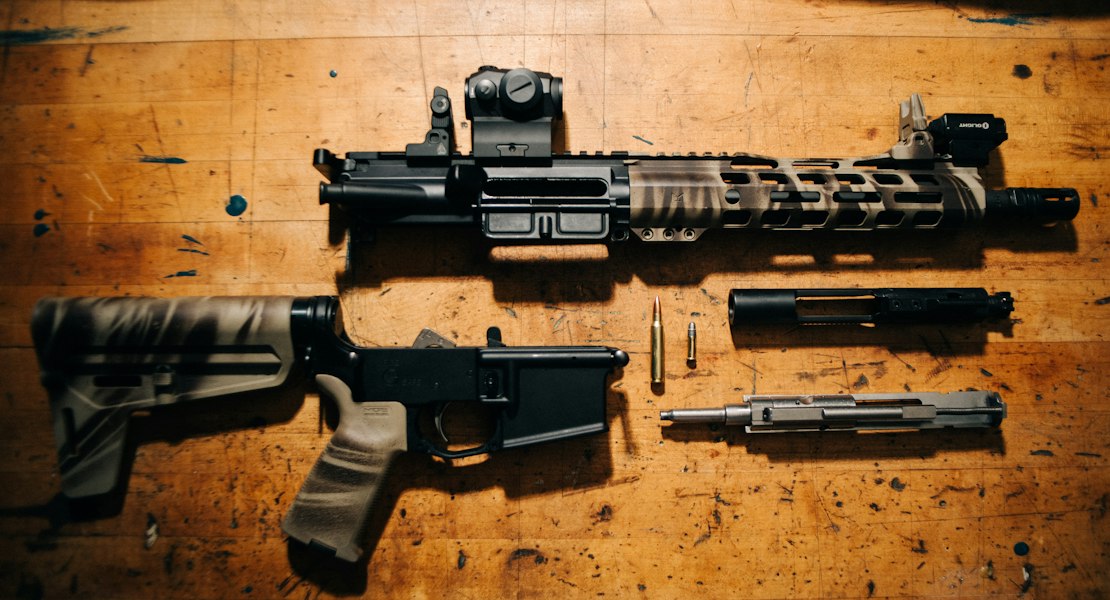
FRT vs Binary Trigger vs Bump Stock: What’s the Difference?
These three get lumped together because they all let a semi-auto rifle fire faster. Mechanically, they have little in common:
- A forced reset trigger uses the bolt carrier and hammer to push the trigger forward. You pull, the action resets the trigger against your finger, and you pull again.
- A binary trigger fires one round when you pull and a second when you release. Nothing in the action forces the trigger forward; a binary trigger simply adds a second firing event to the release stroke.
- A bump stock leaves the fire control group alone. Recoil slides the whole rifle back and forth so the trigger bumps into a finger that never moves. The Supreme Court held in 2024 that this is still one shot per function of the trigger.
So a binary trigger is not a forced reset trigger, even though the two are often sold side by side. If what you want is a reset you can feel and control, rather than a second shot on release, the forced reset approach is the one to study.
Which Platforms Use Forced Reset Systems?
The AR-15 is where forced reset triggers started and where most of them still go, because the mil-spec fire control group has a predictable layout to design around. Reset systems for other platforms followed:
- AR-15 and AR-9: drop-in FRT trigger groups, plus selector-based reset systems such as the AR-15 super safety trigger.
- AK: reset systems have to work around the AK’s trip bar and its very different fire control layout, which is why the AK Super Safety uses a 3-position selector instead of a drop-in trigger.
- MP5 / roller-delayed: builders run reset systems in AR-compatible lowers, like our MP5 super safety lowers.
- Rimfire pistols: the Taurus TX22 has its own active reset part, the TX22 ART, built around the pistol’s internal trigger layout.
Where Does the Super Safety Fit In?
The Super Safety is a selector-based forced reset system. In its active reset position, it uses the same energy an FRT does, the rearward and forward travel of the bolt carrier, to push the trigger forward. The difference is where the parts live: instead of replacing the trigger group, it replaces the safety selector with a three-position cam for safe, semi, and active reset.
Here is the sequence. On the rearward stroke, the bolt carrier contacts a lever. A dovetail locks that lever to the cam, so the cam rotates with it. On the forward stroke, the cam shelf presses on a cut mil-spec trigger and pushes it back to reset. For a part-by-part walkthrough, see how the super safety cam and lever work.
Two practical differences matter to builders. You keep a normal semi-auto position on the same selector, so you choose the mode without swapping parts. And it works with a mil-spec style hammer and a cut trigger rather than a proprietary trigger group. Our super safety vs forced reset trigger comparison goes deeper into both designs.
Where Do FRTs Stand Federally?
Federally, the picture changed in two steps. In June 2024, Garland v. Cargill held that a semi-auto rifle does not become a machine gun just because it fires quickly. Then, on May 16, 2025, the Department of Justice settled its cases with Rare Breed Triggers. According to the DOJ settlement announcement, the government stopped treating covered forced reset trigger designs as machine guns.
State law is a separate question, and it has changed several times since 2025. Some states ban forced reset devices under their own laws, so check your current state statute before buying. Our article on how the legal status of forced reset triggers changed covers the full timeline. This is general information, not legal advice.
What to Check Before Running a Forced Reset System
Any reset system that uses carrier energy depends on that energy being consistent. Before you blame the trigger, check these four things:
- Bolt carrier group: carrier-driven reset systems need a full-mass carrier. That is why the Super Safety requires an M16 bolt carrier group.
- Buffer weight: too light and the reset window shrinks; too heavy and the rifle short-strokes. Our Super Safety kits use an H3 buffer as the baseline.
- Gas and suppressor: overgassed and suppressed rifles drive the carrier faster, which compresses reset timing.
- Ammunition: test with the load you will actually run, at speed, not just slow single shots.
If you shoot pistols, the same logic applies at a smaller scale; our guide to what an active reset trigger does covers the TX22 side.
Choosing the Right Reset System for Your Build
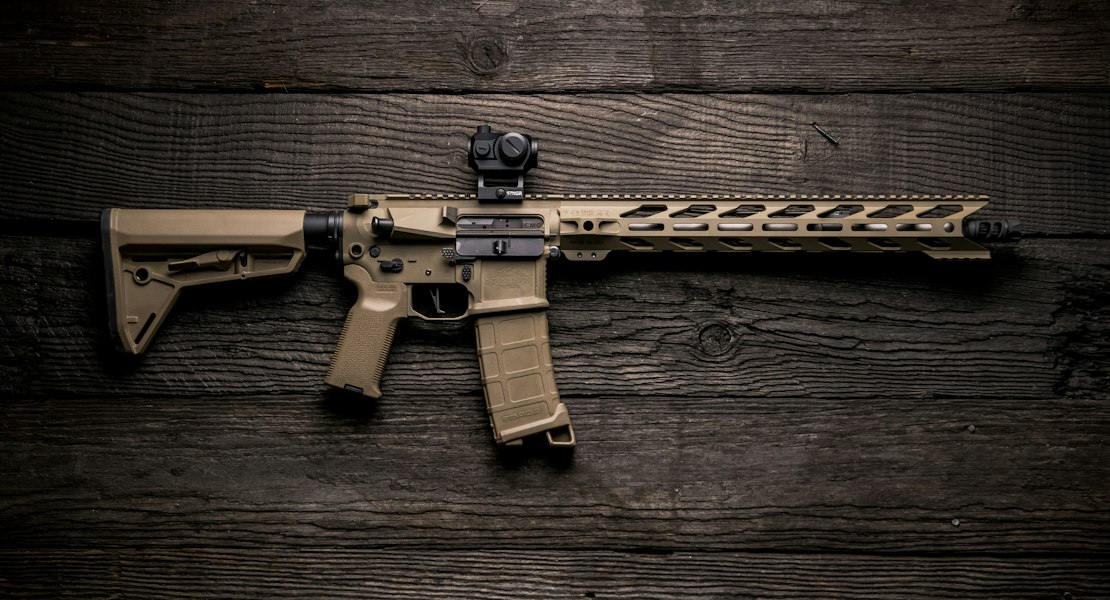
So, what is an FRT trigger in plain terms? It is a trigger group that lets the bolt carrier and hammer force the trigger forward after each shot, with a locking bar that holds it until the bolt is back in battery. Covered designs have been federally settled since 2025, while state laws still vary. If you would rather keep a mil-spec style fire control group and a selector that switches between semi and active reset, the Super Safety is the other route. Browse the Redacted Arms AR-15 Super Safety kits, or call us Monday–Friday, 9–5 EST, and we will help you match the setup to your rifle.
FAQs
What does FRT stand for?
FRT stands for forced reset trigger. It is a replacement trigger group, most often for the AR-15, that uses the rifle's cycling action to push the trigger forward after each shot instead of relying only on the trigger spring and the shooter releasing it.
How does an FRT trigger work?
When a round fires, the bolt carrier pushes the hammer rearward, and the hammer forces the trigger forward. A locking bar holds the trigger there until the bolt returns to battery. Once the bar releases, the shooter must pull the trigger again to fire the next round, so each shot requires its own trigger function.
Are FRT triggers legal?
Federally, covered forced reset trigger designs have not been treated as machine guns since the Department of Justice settled its cases with Rare Breed Triggers on May 16, 2025. State law is separate, and some states ban forced reset devices under their own statutes, so check your current state law before buying. This is general information, not legal advice.
Is the Super Safety an FRT?
The Super Safety is a selector-based forced reset system rather than a drop-in FRT trigger group. In its active reset position, the bolt carrier moves a lever and cam in the selector that push a cut trigger forward, and the same selector also has standard safe and semi positions.
Is a binary trigger a forced reset trigger?
No. A binary trigger fires one round when the trigger is pulled and a second when it is released. A forced reset trigger fires once per pull and uses the bolt carrier and hammer to push the trigger forward before the next pull. They are different mechanisms with different legal treatment in some states.