



Surface Roughness: The Spec Most Shooters Never See but Components Still Feel
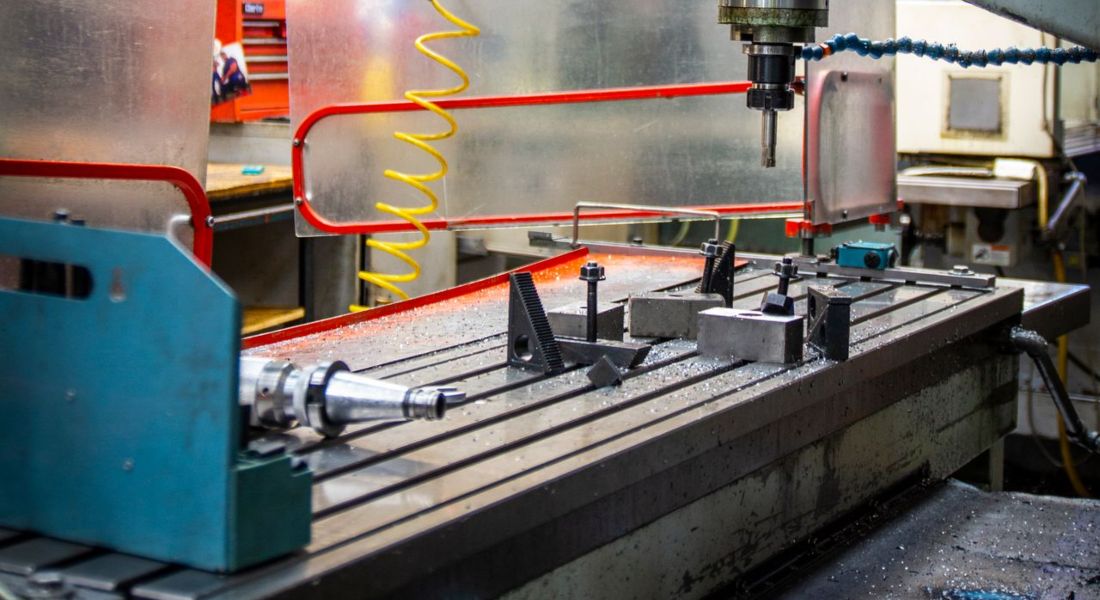
Surface roughness, usually written as Ra, is the average height of the microscopic peaks and valleys left on a part by machining or finishing. A face-milled surface typically measures 32–125 µin Ra, while a lapped surface can measure under 4 µin. On firearm contact surfaces like sears, hammers, cams, and carriers, that texture shapes friction, trigger feel, and wear. Ra alone still doesn't describe a surface completely, so two parts with the same number can feel different.
A trigger can measure exactly to spec on pull weight and still feel gritty. Part of the reason is a spec that almost never shows up on a product page: surface roughness. Every machined surface carries a texture of microscopic peaks and valleys, and wherever two parts slide against each other, you feel it. Redacted Arms designs and builds firearm parts and accessories for the fire control group, where that contact happens on every shot. Here’s what surface roughness measures, where it shows up, and where the number stops being useful.
What Does Surface Roughness Actually Measure?
Run a measuring stylus across a machined part, and it records a profile of tiny peaks and valleys. Ra, the roughness average, is the average distance of that profile from its centerline. It’s reported in microinches (µin) or micrometers (µm), and 1 µm equals about 39.4 µin. Rz is a related value that averages the tallest peak-to-deepest-valley heights, so it reacts more to scratches and burrs.
The ASME B46.1 standard splits surface texture into three parts:
- Roughness is the fine texture left by the tool.
- Waviness is the longer, gentler variation underneath it.
- Lay is the direction the pattern runs. Two parts can share a roughness value and still differ on the other two.
Typical Ra by Manufacturing Process
| Process | Typical Ra (µin) | Typical Ra (µm) | What it looks like |
|---|---|---|---|
| Sand casting (as-cast) | 500–1,000 | 12.5–25 | Coarse, grainy texture |
| Investment casting | 63–125 | 1.6–3.2 | Smooth-looking, but not machined |
| Face milling | 32–125 | 0.8–3.2 | Visible tool marks |
| Metal injection molding (as-sintered) | 32–63 | 0.8–1.6 | Even, satin finish |
| Finish turning | 16–63 | 0.4–1.6 | Fine, directional tool lines |
| Wire EDM (multi-cut) | 8–32 | 0.2–0.8 | Even, matte finish |
| Fine grinding | 4–16 | 0.1–0.4 | Smooth, dull sheen |
| Lapping | 0.5–4 | 0.013–0.1 | Near-mirror |
Where does roughness show up in a trigger?
The trigger is where shooters feel surface roughness most directly. During the pull, the sear surface slides against the hammer hook under spring pressure. Any tool marks or burrs on those surfaces become part of the pull, and you feel them as grit or a slight hitch. That’s why a trigger job usually starts by stoning roughness and burrs off the hammer and sear.
Super safety systems add another contact surface. The cam rides across the cut on the trigger every cycle, and a rough or burred edge can catch the cam even when the cut depth is correct. That’s why the edge on a super safety cut trigger matters as much as its depth.
How a part was made doesn’t settle the question on its own. Metal injection molding (MIM) is widely used for small firearm parts, including triggers, and some shooters treat it as the budget option. On finish alone, the numbers don’t support that reputation. The MIM debate is really about strength and consistency, not surface texture.
Moving Parts Outside the Trigger
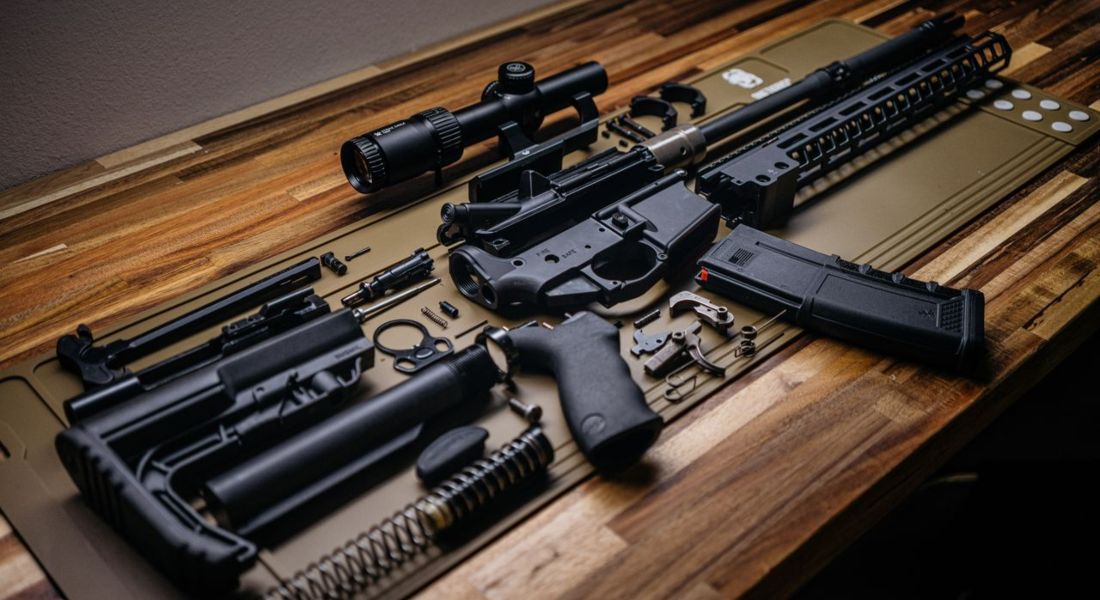
Every cycle, an AR-15 bolt carrier slides along the inside of the upper receiver and drags across the hammer on its way back. The carrier’s finish affects how much friction that contact carries. It’s part of why carrier coatings get so much attention, and why a dry, rough carrier feels different from a smooth, lubricated one when you work the charging handle.
Bore finish works the same way on a different scale. Every rifling method leaves some tooling marks in the bore, and some barrel makers hand-lap their bores to smooth them out. Makers market lapped barrels as easier to clean and quicker to settle in. That’s one reason two barrels with the same barrel length and twist rate can still behave differently.
Coatings Change the Surface You Feel
A finish isn’t only machining. Firearm coatings change the outer surface too, and each type does it differently. Parkerizing leaves a matte, crystalline surface that’s porous enough to hold oil. Nitriding is a diffusion treatment that hardens the steel’s surface without adding a coating on top. Sprayed or plated finishes add a thin layer that largely follows the surface underneath, so prep work still shows through.
A coating can lower friction or resist wear, but it can’t fully hide a rough surface beneath it. The Schmid Match trigger Redacted Arms carries uses a nickel PTFE finish to cut friction where the hammer, trigger, and disconnector slide against each other. However, smoother also isn’t automatically better. The valleys in a surface hold lubricant, and a surface that’s too smooth can hold less of it. That’s why parkerizing is intentionally porous, and why a mirror polish isn’t the goal on every working surface.
Why Ra Doesn’t Tell the Whole Story
Ra is useful, but it’s an average, and averages hide shape. A Sandia National Laboratories presentation on measuring surface topography makes the point with a slide titled “Why Ra Is Not Enough.” It shows surfaces with similar Ra values that look clearly different. The same presentation lists wear and friction on sliding surfaces as properties that surface texture affects.
For firearm parts, a surface with a few deep scratches and one with many shallow ones can average out to similar Ra values. But they won’t feel the same under a sear. The direction of the tool marks counts too. Lay running with the direction of travel slides differently than lay running across it. A matching number on a spec sheet doesn’t guarantee matching feel.
Can Tool Marks Make Parts Break?
They can. The same Sandia presentation lists fatigue stress concentration among the properties surface texture affects. A deep tool mark or scratch works like a tiny notch. Under repeated loading, stress concentrates at the bottom of that notch, and that’s where fatigue cracks tend to start.
That matters most for small parts that flex or take an impact on every shot, like springs, extractors, and hammer hooks. A smooth surface won’t make a weak part strong. But a sharp scratch can shorten the life of a part that was otherwise built right.
Does a Rough Part Smooth Itself Out?
Partly. When two surfaces first slide against each other, the highest peaks wear down, which is part of why some triggers feel smoother after some use. Wearing in only knocks the peaks off, though. A deep burr or a bad edge can wear the part it touches instead of wearing away. Hardness shapes which part loses that fight. A smooth surface on soft material still wears fast against a harder one.
So, when you clean and maintain a super safety system, use a fine abrasive only to smooth burrs off the cam, never to reshape it. The same rule covers every engagement surface. Smooth the surface, never change its geometry. Reshaping a sear or hammer engagement can create unsafe conditions like hammer follow.
How to Check a Finish Without Lab Equipment
You don’t need a profilometer to find most problems. Once the fire control group is assembled, a trigger jig holds it in a vise, so you can dry-fire it and feel for grit outside the lower receiver. Apart from that, machinists and gunsmiths often check finish with three simple tools. A fingernail dragged across the surface catches burrs and deep marks. A jeweler’s loupe or magnifier shows what the fingernail felt. Surface roughness comparator plates let you compare a part against reference finishes by touch and sight.
Before installation, check these contact surfaces:
- The super safety cam‘s working edge
- The cut edge on the trigger
- The hammer hooks and sear surface, where roughness turns into grit in the pull
- The lever’s contact point
- The underside of the bolt carrier
Any spot that catches a fingernail is a finish problem worth fixing before the first shot.
The Spec You’ll Never See on a Product Page
Surface roughness won’t show up in a listing, but it shows up in every trigger pull and every cycle. It explains why burrs matter more than their size suggests, why tool marks can shorten a part’s life, and why finish is part of how a component performs, not just how it looks.
If you’re building or upgrading your setup, run the fingernail-and-loupe check on every contact surface before installation. Redacted Arms backs its branded parts with a lifetime warranty, but a clean, burr-free surface is still one of the cheapest ways to keep surface roughness from becoming the thing you feel.
FAQs
What is surface roughness (Ra)?
Surface roughness measures the microscopic peaks and valleys on a surface. Ra, the roughness average, is the average distance of that surface profile from its centerline, reported in microinches or micrometers. Lower numbers mean a smoother surface.
What is the difference between Ra and RMS?
Both describe average surface roughness, but they calculate it differently. Ra uses the arithmetic average of the profile heights, while RMS uses the root mean square, which weighs larger peaks and valleys more heavily. For many machined surfaces, RMS reads roughly 10% higher than Ra.
Does polishing trigger parts make the trigger better?
Removing burrs and tool marks from engagement surfaces can make a trigger feel smoother. Polishing should never change the angle or shape of the sear or hammer engagement, because altering that geometry can cause unsafe conditions like hammer follow. If you're unsure, leave it to a qualified gunsmith.
Should you polish AR-15 trigger parts?
Light stoning to remove burrs is common, but aggressive polishing isn't necessary on quality parts and can remove surface treatments. Check the parts on a trigger jig first, and only smooth what's actually rough.