



Optic Mount Repeatability: What Actually Determines Whether Zero Returns
A repeatable optic mount holds the point of impact within about 0.1–0.5 MOA of remount repeatability; a mount without that consistency can shift a full MOA or more on a single remount. Optic mount repeatability comes down to three mechanical variables: how tightly the mount's rail interface holds to spec, how the clamping or lockup mechanism re-engages, and whether the ring and base screws were torqued correctly. None of that shows up as a single number on a spec sheet, which is why two mounts marketed as "return to zero" can behave very differently on the same rifle.
Every quick-detach optic mount claims to return to zero. Most don’t explain what that claim actually measures. Fewer explain why one mount holds it, and another doesn’t. Our super safety trigger follows the same rule: land in the same spot every cycle, not most cycles. The same rule applies to whatever you mount on top of it. Here’s what actually decides optic mount repeatability: the tolerances and torque numbers that separate a mount you can trust from one you can’t.
What “return to zero” actually means
You measure return-to-zero repeatability one way: shoot a group, remove the optic, reinstall it, then shoot a second group. Measure how far the second group’s center shifted from the first, in minutes of angle (MOA). A mount holding 0.2 MOA of repeatability puts the second group about 0.2 inches off from the first at 100 yards. That’s different from zero retention under recoil, which measures whether a mount holds position while it stays on the rifle. A mount can hold zero perfectly under recoil and still miss it after you remove and reinstall it. Repeatability is specifically about the remount.
Typical remount repeatability by mount type
| Mount Type | Typical Remount Shift | Rail Tolerance Dependency | Relative Cost |
|---|---|---|---|
| Fixed/bolted rings or base | Not applicable — not designed to be removed | Low | $ |
| Single-lever QD | 0.5–1.2 MOA | High | $$ |
| Dual-lever QD | 0.2–0.5 MOA | Moderate | $$$ |
| Cam-lock/recoil-lug QD | 0.1–0.3 MOA | Moderate to high | $$$$ |
The three variables that actually control repeatability
Two mounts can share the same lockup type and still perform differently. Remount repeatability comes down to three things stacking together: how tight the rail tolerances run, how well the clamping mechanism re-engages, and how consistently you torque the mount down. Get one wrong, and the other two don’t matter. A well-machined mount on a bent rail won’t return to zero, no matter what the box claims.
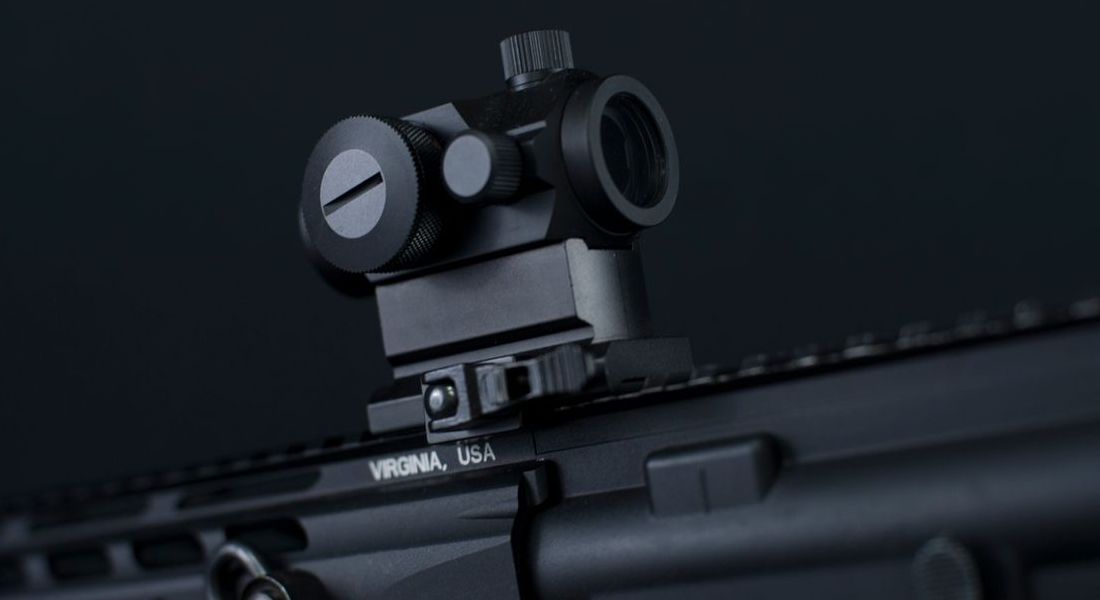
Rail and interface tolerance
Most AR platforms use a Picatinny rail interface built to MIL-STD-1913: a 0.206 in. locking slot width and 0.394 in. slot-center spacing. Mounts and rails within that tolerance seat the same way every time. A worn or out-of-spec rail — or one a manufacturer cut with sloppy tolerances — introduces play no lockup mechanism can fix. Installing a mount on a rail nobody measured is one of the quieter AR-15 assembly mistakes. It doesn’t show up until the optic comes off and goes back on. That’s one more reason optic mount repeatability starts with the rail, not just the mount.
Clamping and lockup design
Single-lever QD mounts clamp at one contact point. That concentrates pressure and leaves room for the mount to seat slightly differently each time you close it. Dual-lever and cam-lock designs spread that clamping force across two points, or engage a recoil lug directly against the rail. That’s why they post tighter remount numbers in the table above. The tradeoff is cost and, in some cases, added height over the bore — a genuinely repeatable optic mount rarely wins on price.
How much torque does a scope mount actually need?
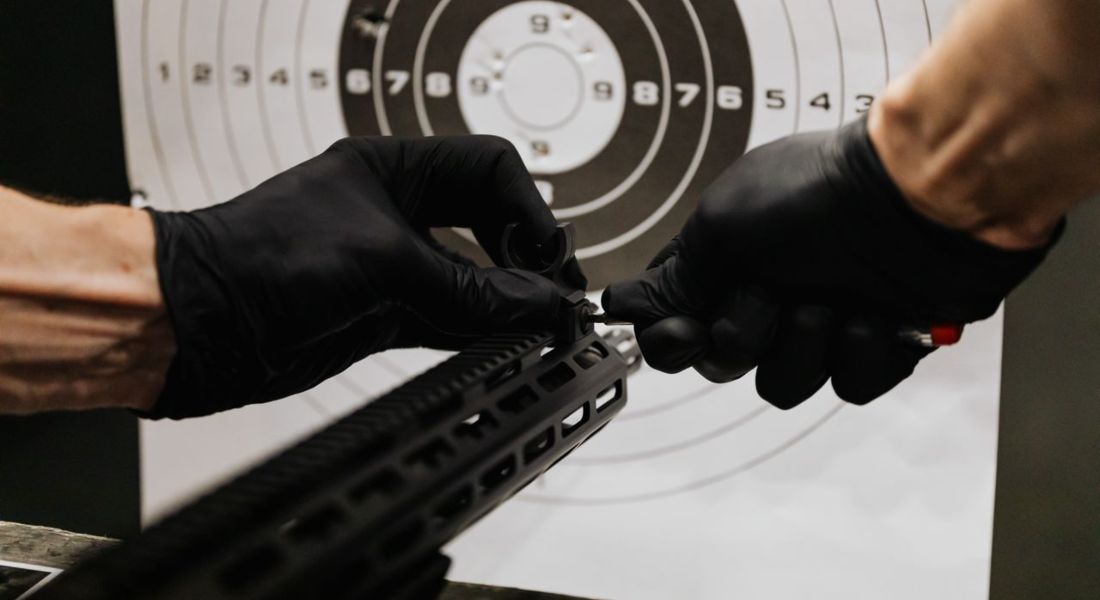
Torque is the variable builders get wrong most often. It’s also the easiest to fix. Ring cap screws typically run 15–25 in-lbs, depending on the scope tube’s material and diameter. Base or action screws run about 15 in-lbs on an aluminum receiver, up to 25 in-lbs on steel. Both directions of error matter: too loose and the scope shifts under recoil; too tight and you can strip the screws or bind the tube. Apply torque evenly, in a star pattern across the ring screws, and check it with an actual inch-pound wrench — not “snug,” not “by feel.” Torque it inconsistently between removals and it will never post repeatable numbers, even if it’s a good mount. Recheck it after every remount, not just the first.
How recoil impulse from your platform loads the mount over time
Repeatability isn’t only about the moment you remount an optic. It’s also about what the platform does to the mount between remounts. The recoil impulse behind AR-9 vs AR-15 isn’t the same. A blowback-operated 9mm upper delivers a sharper, shorter jolt to the rail than a gas gun’s smoother cycling does. That difference can work mount hardware loose faster on one platform than the other.
Not all AR-15 bolt carrier groups transmit the same shock into the receiver, either. A BCG that’s binding, over-staked, or running the wrong buffer weight sends more shock up through the rail with every cycle. None of that shows up on a return-to-zero spec sheet. It’s still part of why the same mount performs differently on two different builds.
How often should you re-check optic mount repeatability?
Check it more often than most owners do:
- After removing and reinstalling the optic, since that’s when you actually test mount repeatability
- After a hard drop or impact to the rifle, mount, or rail
- Before a long-distance outing or match day, if the rifle has sat unused for months
- Any time a rail or mount shows visible wear at the contact points
A rifle coming out of long-term firearm storage needs an actual zero check before it goes back to serious use — not just a visual once-over. Screws that held torque in spring won’t necessarily hold it months later.
The military rail dimensioning standard sets that tolerance, and every Picatinny-pattern mount and rail is supposed to be cut to it. A worn or out-of-spec rail is one of the few repeatability problems you can’t fix by re-torquing. At that point, replace the rail or the mount — not your technique. Quick field check: remount the optic, dry-fire on a fixed point of aim, and confirm the reticle returns to the same spot before you trust it at distance.
A repeatable mount is a tolerance stack, not a marketing claim
“Return to zero” printed on a box is a claim about engineering discipline — rail tolerance, lockup design, and torque. It’s not a guarantee that applies equally to every mount carrying the label. Optic mount repeatability is something you can verify yourself, with a torque wrench and a target. Verify it before you trust a mount at distance.
Our super safety trigger runs on that same tolerance discipline — parts that return to the same position every cycle, not most cycles. If mount repeatability matters that much on your build, start with the super safety kit for the AR-15 platform. Carry that same standard through the rest of your build.
FAQs
How much MOA shift is normal for a mount that claims return to zero?
How much MOA shift is normal for a mount that claims return to zero? Well-built dual-lever or cam-lock QD mounts typically hold 0.1–0.5 MOA of shift after a remount; anything consistently over 1 MOA points to a worn rail, a single-point clamping design, or inconsistent torque rather than a defective optic.
Is a fixed mount more repeatable than a quick-detach mount?
Yes, by definition — a fixed mount is never removed, so there's no remount event to introduce shift. The tradeoff is that you lose the ability to swap optics or fold the rifle down for transport, which is the entire reason QD mounts exist.
What torque should I use on scope ring and base screws?
Ring cap screws typically run 15–25 in-lbs depending on the scope tube, and base or action screws usually run about 15 in-lbs on an aluminum receiver and up to 25 in-lbs on steel — always check the specific scope and mount manufacturer's spec first.
How often should I check my zero after removing an optic?
Check it every time the optic comes off and goes back on, after any hard drop or impact, and before any outing where precision actually matters, especially if the rifle has sat unused for an extended period.
Can a worn or out-of-spec Picatinny rail affect repeatability?
Yes — rail tolerance is one of the few repeatability problems torque can't fix. A rail cut outside MIL-STD-1913 spec, or worn from repeated mount removal, introduces play that no lockup mechanism can compensate for.