



How the Glock Changed Pistol Design Forever
The Glock 17 did not invent the polymer-framed pistol, the striker-fired action, or the high-capacity 9mm. Its real impact came from combining those ideas into a lightweight, simple, reliable service pistol that succeeded at a scale earlier designs never reached. Once military, law enforcement, and civilian users accepted that formula, the rest of the handgun industry had to take it seriously.
The history of Glock is often told as the story of an Austrian manufacturer with little firearms-design experience suddenly beating established gunmakers at their own game. That is part of the story, but it does not fully explain why the Glock 17 mattered. Most of the individual concepts inside the pistol already existed somewhere. What Gaston Glock did differently was decide which traditional service-pistol features were genuinely necessary, combine several proven ideas into a simpler package, and manufacture that package efficiently enough for widespread institutional use. The result was more than a commercially successful handgun. The Glock 17 helped change what manufacturers, agencies, and shooters expected a modern service pistol to be.
What Made the Glock 17 Different in 1982?
When Glock began developing its first pistol in the early 1980s, semiautomatic service handguns were already changing. High-capacity 9mm pistols were becoming increasingly important, but metal frames still dominated the market. Hammer-fired actions were familiar, and manual safeties, decocking levers, or combinations of both remained common on military and police sidearms.
Austria’s military wanted a replacement pistol that would be lightweight, reliable under difficult conditions, safe to carry, and straightforward to operate. Gaston Glock approached those requirements without an existing handgun platform that had to be preserved. That gave his team room to reconsider the entire package rather than gradually modify a design that had been around for decades.
The resulting P80 combined an injection-moulded polymer frame with striker-fired operation, automatic internal safeties, a 17-round double-stack magazine, and relatively few external controls. Glock submitted the pistol during Austria’s military trials in 1982. The design was ultimately selected for service.
None of those features were enough to transform handgun design by themselves. The difference was putting them together in one pistol that could survive military testing, be manufactured efficiently, and remain simple enough for large numbers of users to operate and maintain.

Glock Didn’t Invent Polymer — It Made Polymer Normal
One of the most persistent myths surrounding the Glock 17 is that it was the first polymer-framed pistol. It wasn’t. Heckler & Koch had already introduced the VP70 more than a decade earlier, proving that a handgun could be built around a polymer frame.
What Glock changed was the perception of that material. The VP70 demonstrated that polymer construction was possible. The Glock 17 demonstrated that it could form the basis of a mainstream military, police, and commercial service pistol.
The Difference Was Scale
Before Glock became widely accepted, an injection-moulded polymer frame could easily be viewed as experimental or simply cheaper than machined steel or aluminum. Successful institutional use changed that. Polymer became associated with lower weight, resistance to corrosion, efficient manufacturing, and the ability to shape a frame without machining the entire structure from metal.
That did not mean metal stopped mattering. Components that handled pressure, repeated impact, or sliding contact still depended on appropriate steels and other durable materials. As with comparing firearm materials and construction more broadly, the important question was not whether polymer was universally better. It was whether the material made sense for the job the frame actually had to perform.
Once the Glock 17 proved that a polymer frame could withstand serious service, other manufacturers had much less reason to treat an all-metal frame as a requirement for credibility. Over time, polymer stopped being the unconventional choice and became one of the defining features of modern defensive and duty pistols.
The Safe Action System Changed the Service-Pistol Formula
The Glock 17 also simplified what the shooter had to manage. Instead of a traditional manual safety and decocker, it relied on automatic internal safeties and a striker-fired system with fewer external controls.
- No separate manual safety to disengage before firing.
- No decocking procedure after firing.
- More consistent operation from one shot to the next.
- Fewer external controls for the shooter to manage.
Striker-fired operation was not new, but Glock helped make it mainstream in service pistols. As explained in how firearm triggers actually work, hammer-fired and striker-fired systems manage stored energy through different component layouts. Glock’s influence was proving that a simpler striker-fired format could succeed at military and police scale.
Simplicity Wasn’t Just About Fewer Parts
One of the most important characteristics of the original P80 was hidden inside the pistol: the design used only 33 parts. That unusually low count reflected a broader engineering philosophy built around reducing unnecessary complexity.
Fewer interacting components could simplify manufacturing and maintenance, while the limited number of external controls made the pistol comparatively straightforward for the shooter as well. Normal firearm wear over time still applied to springs and moving contact surfaces, but Glock had reduced the number of parts required to make the system work.
How the Glock 17 Broke From Traditional Service-Pistol Design
The differences become clearer when the original Glock 17 is compared with the service-pistol conventions of its era.
| Feature | Conventional Service-Pistol Expectation | Glock 17 Approach |
|---|---|---|
| Frame | Steel or aluminum | Injection-molded polymer |
| Firing system | Hammer-fired designs common | Striker-fired |
| External controls | Manual safety and/or decocker common | Minimal external controls |
| Safety approach | Often involved a separate user-operated control | Automatic internal mechanical safeties |
| Design philosophy | Refine established service-pistol layouts | Reduce unnecessary complexity |
Its significance came from combining all of those decisions without producing a pistol that was too fragile, complicated, or specialized for institutional use.
Military and Police Adoption Proved the Design
An unconventional firearm design does not become an industry standard simply because it performs well during development. It has to survive in the hands of people who depend on it, and institutional adoption became one of the most important parts of Glock’s rise.
After Austria selected the P80, the Glock 17 gained additional military acceptance in Europe and entered the U.S. market during the 1980s. American law-enforcement agencies then became particularly important to the pistol’s reputation because they were evaluating it around practical requirements rather than novelty.
That transition was not automatic. Plenty of military firearms have struggled in the civilian market because the qualities that satisfy an institutional requirement do not always translate into broader commercial appeal. Glock was different because many of its military advantages, such as low weight, capacity, straightforward operation, and mechanical simplicity, also appealed to police departments and civilian buyers.
At that point, the competitive question changed. Manufacturers were no longer deciding whether a polymer-framed striker-fired service pistol could work. They were deciding how to compete with one that already had.
Then the Rest of the Pistol Market Changed
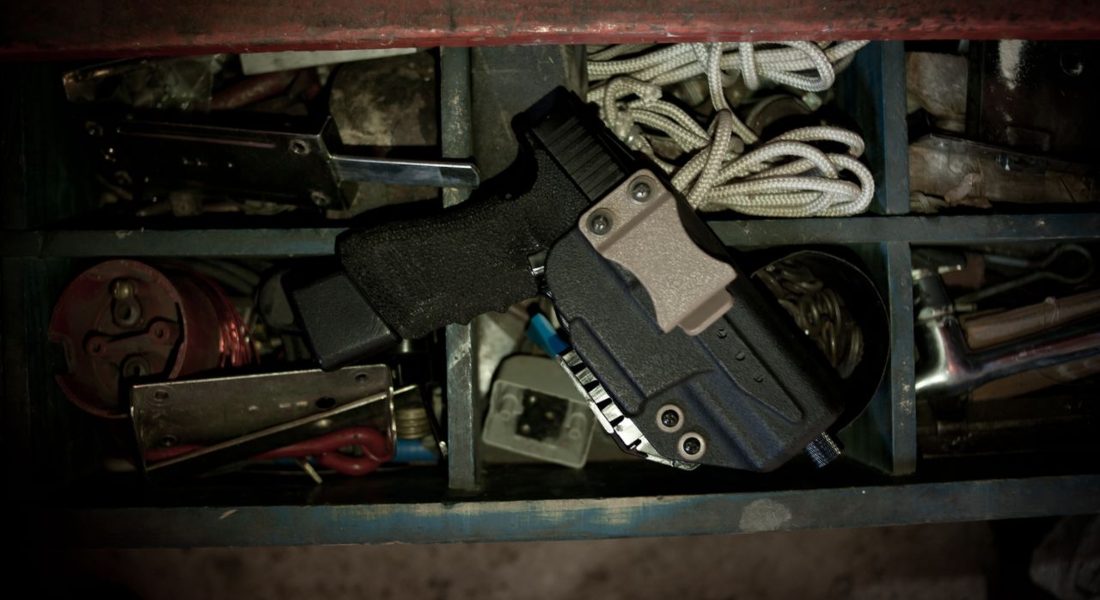
The strongest evidence of Glock’s influence is not simply the number of Glock pistols that have been sold. It is the direction the rest of the handgun market moved afterward. Over time, major manufacturers that had long been associated with traditional metal-framed or hammer-fired handguns introduced polymer-framed striker-fired pistols of their own. Smith & Wesson, SIG Sauer, Walther, Heckler & Koch, Springfield Armory, and others all developed service, defensive, or commercial handguns that operated within a market Glock had helped redefine.
Calling those pistols Glock copies would oversimplify what happened. Their trigger systems, internal safeties, ergonomics, frame designs, and levels of modularity can differ substantially. Some later platforms introduced features Glock had never emphasized, including removable fire-control units and highly modular grip systems.
Glock’s bigger influence was that polymer construction, striker firing, high capacity, and relatively simple external controls stopped needing to be justified. They became accepted design choices for a serious handgun.
Competition Moved to the Details
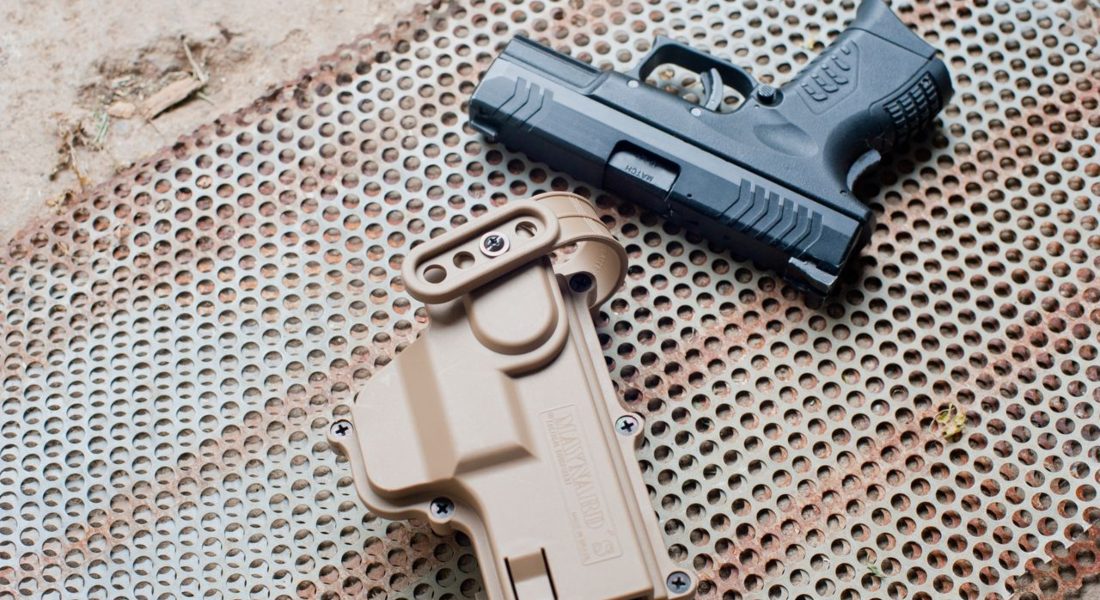
Once the basic format had become familiar, manufacturers could compete over the parts of the experience that were still open to improvement. Grip geometry became more sophisticated. Interchangeable backstraps appeared. Accessory rails became expected, factory optics mounting became increasingly common, ambidextrous controls improved, and trigger feel became a major differentiator between competing striker-fired platforms.
In other words, the debate moved forward. The industry was no longer arguing over whether a polymer-framed striker-fired pistol belonged in a duty holster. Manufacturers were arguing over who could make that kind of pistol more ergonomic, adaptable, modular, or optics-ready.
Market familiarity strengthened the format further. Shooters trained on it, agencies standardized around it, and enormous ecosystems of holsters, sights, magazines, replacement components, and accessories developed around successful platforms. A similar combination of familiarity and support helps explain why the AR-15 became America’s most popular rifle. Once a platform becomes a baseline, competitors are no longer competing only against the firearm itself. They are competing against everything that has grown around it.
Glock Changed Less Than the Industry Around It
One of the clearest signs of the Glock 17’s influence is how recognizable its basic architecture remains more than four decades later. Successive generations have changed grip texture, frame dimensions, controls, backstraps, accessory mounting, and internal components, but those updates have largely refined the original formula rather than replaced it.
The newest example is Glock Gen6, officially launched in January 2026 with the G17, G19, and G45. Gen6 introduced revised grip geometry, a flat-faced trigger, expanded grip texture, and a new optic-ready system designed around current shooter expectations.
Those are meaningful updates, but they also show how little the foundation needed to change. The Gen6 pistols still use a polymer frame, striker-fired operation, the Safe Action system, and the same broader emphasis on relatively simple controls and straightforward operation.
What changed more dramatically was the market around Glock. Features that made the original Glock 17 look unconventional in the early 1980s became common across modern service and defensive pistols, while manufacturers shifted their attention toward ergonomics, modularity, optics support, trigger feel, and other areas where the basic formula could still be improved.
Why the Glock 17 Still Matters
The most important point in the history of Glock is not that the company invented polymer frames, striker-fired actions, or high-capacity magazines. It didn’t. Glock’s influence came from combining existing ideas into a pistol that proved reliable enough for military and police use. It became simple enough for large-scale adoption, and practical enough to succeed commercially.
That success changed the reference point for the rest of the handgun industry. Manufacturers no longer had to prove that a polymer-framed, striker-fired service pistol could work. Instead, they had to decide how their own designs could improve on a format that buyers already understood and trusted. The Glock 17 changed pistol design less by introducing one revolutionary component than by changing which design choices the industry considered normal. More than forty years later, that may be the clearest measure of its influence.
FAQs
When was the first Glock pistol developed?
Gaston Glock developed the company's first service-pistol prototypes in the early 1980s in response to Austria's search for a new military sidearm. Prototypes were submitted for testing in 1982, and the design was subsequently adopted as the P80 before becoming widely known as the Glock 17.
Was Glock the first polymer-framed pistol?
No. Polymer-framed pistols existed before the Glock 17, most notably the Heckler & Koch VP70. Glock's significance came from demonstrating that a polymer-framed handgun could achieve widespread military, law-enforcement, and commercial acceptance.
Why was the Glock 17 considered revolutionary?
The Glock 17 brought several important ideas together in one successful service pistol: a polymer frame, striker-fired operation, automatic internal safeties, a 17-round double-stack magazine, relatively few parts, and minimal external controls. The individual concepts were not all new, but their combination proved highly influential.
Why did law-enforcement agencies adopt Glock pistols?
Glock pistols offered a combination of relatively low weight, high capacity, mechanical simplicity, consistent operation, and a design suited to large-scale institutional use. Growing police adoption also helped establish confidence in polymer-framed striker-fired pistols more broadly.
Are modern striker-fired pistols based on Glock's design?
Not necessarily. Modern striker-fired handguns can differ substantially in their internal mechanisms, trigger systems, ergonomics, safety features, and modularity. Glock's broader influence was helping establish the polymer-framed, striker-fired service pistol as a mainstream design category rather than providing a blueprint that every later manufacturer simply copied.