



How Grip and Stance Affect Firearm Control
Grip and stance influence firearm control by directing recoil forces through the body, stabilizing alignment, and limiting unwanted motion. Differences in pressure balance, body mass distribution, and structural support change shot recovery speed and consistency between shots, even when the firearm, ammunition, and environment remain identical.
Firearm control often gets framed as hardware. Mechanical accuracy and controllability are different. Accuracy describes precision under ideal conditions. Controllability describes movement when recoil energy transfers during firing. Grip and stance firearm control depends on how the body manages recoil forces, not just equipment. This article explains the physics and biomechanics behind that interaction without technique instruction. This understanding supports smarter choices about super safety for sale.
What Firearm Control Means Mechanically
Control is not about stopping recoil. A typical 9×19mm handgun produces roughly 4-8 joules of recoil energy per shot. That energy must go somewhere. Control means directing that movement in predictable ways.
Mechanical systems inside the firearm influence how the shot is released. For example, components such as the AR-15 fire control group affect trigger break consistency and timing of shot release. However, once the projectile leaves the barrel, movement is primarily influenced by how recoil forces interact with the shooter’s body rather than internal trigger components.
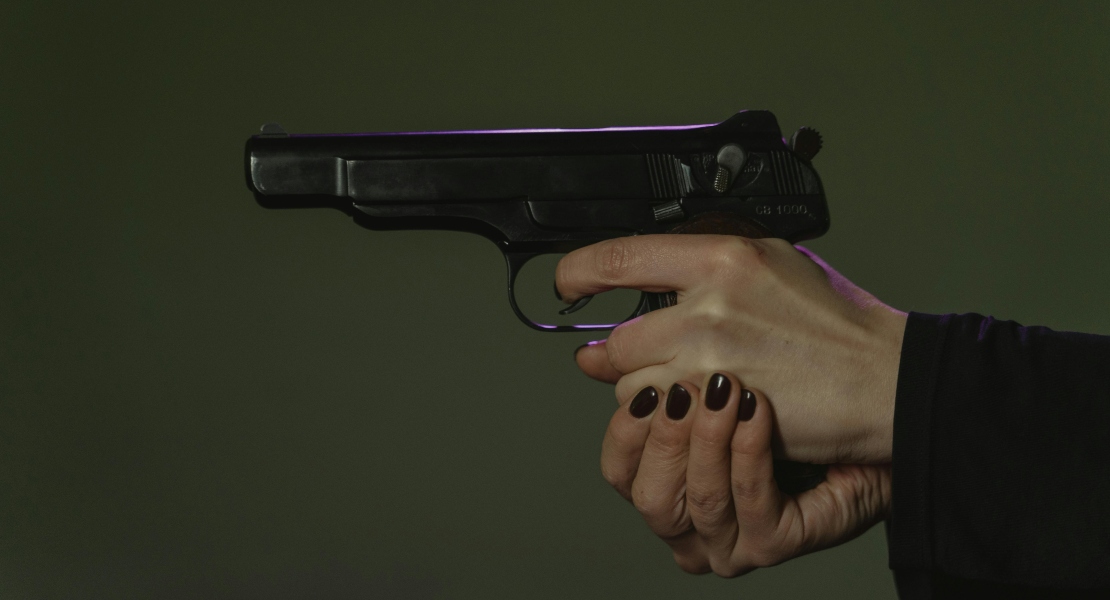
Recoil impulse happens in milliseconds, often under 10 milliseconds. The force pushes backward and slightly upward due to barrel alignment relative to the hand and arm structure. Human input—through contact surfaces and body mass—determines how that force spreads.
This is where firearm grip and stance begin to influence real-world performance, because they determine how consistently those forces are transferred and absorbed during each shot.
Consistency matters more than strength because recoil forces are relatively small compared to total body mass. For example:
- Average adult upper body mass: about 30-40 kg
- Peak handgun recoil force: often under 1,500 newtons for a very short time
If contact pressure and body alignment stay consistent, movement becomes predictable. If they change, shot-to-shot movement changes too.
How Grip Influences Firearm Movement
Grip affects movement through pressure distribution and contact stability. When contact pressure shifts between shots, the firearm rotates slightly differently each time. This is a key reason why researchers studying how grip affects firearm control often focus on pressure repeatability rather than maximum strength.
Rotational force (torque) is a major factor. If the recoil force is applied 3 cm above the main contact point, even small pressure differences can produce measurable rotation. For example:
- A 10% change in contact pressure can change muzzle rise by several millimeters
- At 10 meters, 1 mm at the muzzle can equal several centimeters at the target
Inconsistent contact also allows micro-sliding. Even movement measured in fractions of a millimeter can change alignment between shots.
The outcome is increased muzzle movement and less predictable return after firing. Stable contact tends to produce repeatable motion patterns, which explains why grip and stance control firearms in ways that are measurable even without equipment changes.
How Stance Affects Stability and Balance
Stance mainly influences the center of mass and balance. The human body acts like a multi-joint structure that absorbs and redirects force.
Research into how stance affects recoil control often focuses on how body mass distribution changes energy absorption. If body mass is balanced to resist rearward force, recoil energy spreads through larger muscle groups and skeletal structure. If body mass shifts rearward, more energy must be absorbed by smaller joints and muscles.
Recovery speed depends on how quickly the body returns to equilibrium. A body that is already balanced against rearward force requires less corrective movement.

Physics conceptually shows this:
- Higher center of mass = more sway potential
- Lower center of mass = more stability
- Wider base of support = reduced side-to-side movement
These factors directly explain how stance affects recoil when comparing different shooters or different firing conditions.
Grip, Stance, and Recoil Management
Recoil energy travels from the firearm → hands → arms → shoulders → torso → lower body → ground.
If the structure is aligned to transfer energy efficiently, bones carry more load, and muscles stabilize. If alignment is inconsistent, muscles must compensate more actively. This mechanical relationship explains why analysts often examine grip and stance for recoil management when studying real-world shooting consistency.
Muscle fatigue reduces control over time. Studies on hand force endurance show that grip strength can drop significantly after repeated exertion cycles. As fatigue increases:
- Contact pressure varies more
- Reaction time slows
- Micro-movement increases
These changes show why grip and stance shooting control becomes harder to maintain during long sessions, even when the equipment stays identical.
Why Grip and Stance Affect Follow-Up Shot Consistency
Grip and stance firearm control directly influence how quickly and predictably a firearm returns to alignment after each shot. Follow-up shot consistency depends on return-to-alignment behavior. Ideally, movement during recoil follows a repeatable path.
Predictable movement allows the shooter to anticipate where alignment will return. Random movement forces visual correction each time, slowing shot timing.
In rapid sequences, differences compound. If alignment recovery takes 0.25 seconds instead of 0.18 seconds, over 10 shots, that equals 0.7 seconds difference total. That is significant in timed scenarios.
These performance differences help explain why grip and stance matter in shooting, especially when shots happen quickly and manual correction time is limited.
Why Control Feels Different Between Firearms
Firearms can feel very different during firing, even when they use similar calibres. Weight distribution and moving internal mass strongly influence how recoil energy transfers into the shooter’s body. Heavier firearms usually produce slower recoil acceleration, which can make movement feel smoother even when total recoil energy is similar.
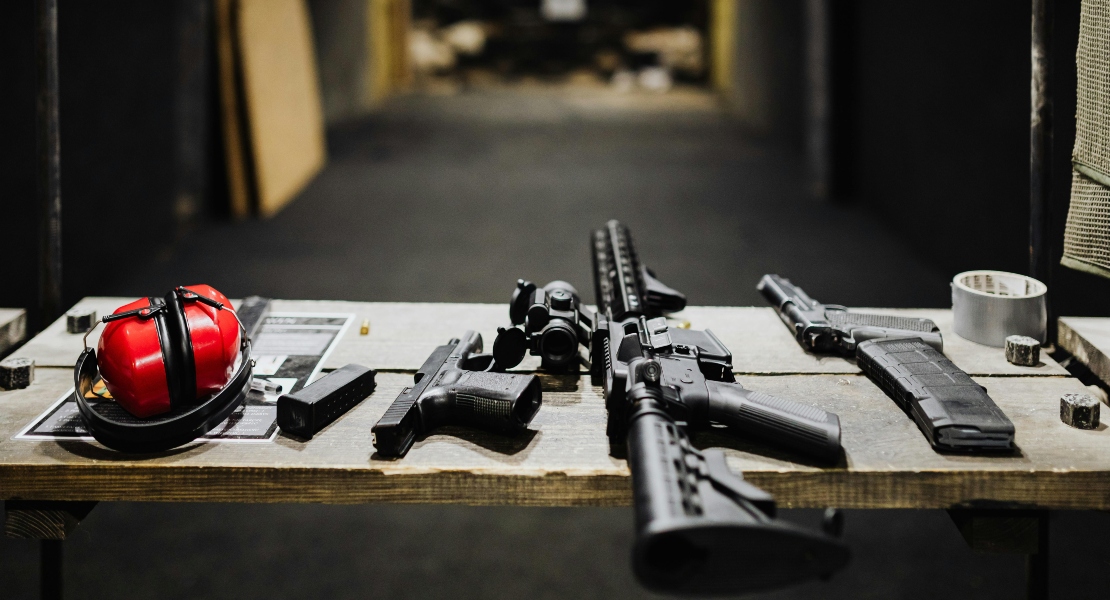
Bore axis height also affects rotation. Even a 5-10 mm difference can change muzzle rise and alignment recovery speed. Ergonomics also matters, since grip shape and surface area change how pressure spreads across the hands and wrists.
This helps explain why discussions like why is AK accuracy so inconsistent often go beyond barrel or ammunition quality. Platform design, moving internal parts, and rifle balance all affect how the firearm moves during recoil, which influences real-world shot consistency even when mechanical accuracy looks similar on paper.
Common Misconceptions About Grip and Stance
Many discussions about recoil and control are shaped by common firearm myths, which often simplify complex physics and biomechanics into oversimplified or misleading ideas.
- “More grip strength equals more control.” – Past a certain threshold, extra force adds little stability. Consistency matters more than peak force output.
- “Stance fixes recoil.” – Stance only affects how recoil travels through the body. It cannot reduce total recoil energy.
- “One grip or stance works for everyone.” – Hand size, arm length, joint mobility, and body mass distribution all change force transfer patterns.
Physics and biomechanics vary between individuals.
Key Factors: Grip and Stance Influence
The following performance factors are directly influenced by grip and stance firearm control, shaping how recoil moves and how consistently the firearm returns to alignment between shots:
- Recoil direction
- Muzzle movement magnitude
- Balance and structural stability
- Fatigue rate during extended use
- Shot-to-shot movement consistency
Firearm Control Comes From Managing Forces, Not Eliminating Them
Firearm control is a mechanical interaction between recoil energy and the human body. Recoil cannot be removed, only redirected and managed. Consistent contact and stable body balance allow movement to stay predictable, which is why grip and stance firearm control is better understood as force management rather than strength or equipment advantage. Understanding how energy transfers through the body helps explain why control can change even when the firearm itself does not. Awareness of these mechanics supports safer, more informed discussions about firearm behaviour and real-world performance.
FAQs
Does grip affect firearm control?
Yes. It changes how recoil forces transfer into the body and how much rotational movement occurs during firing.
How does stance influence recoil?
It affects balance and how efficiently the body absorbs rearward force, which changes recovery speed between shots.
Why does grip consistency matter more than strength?
Repeatable pressure creates predictable movement. Variable pressure creates unpredictable movement, even with high strength.